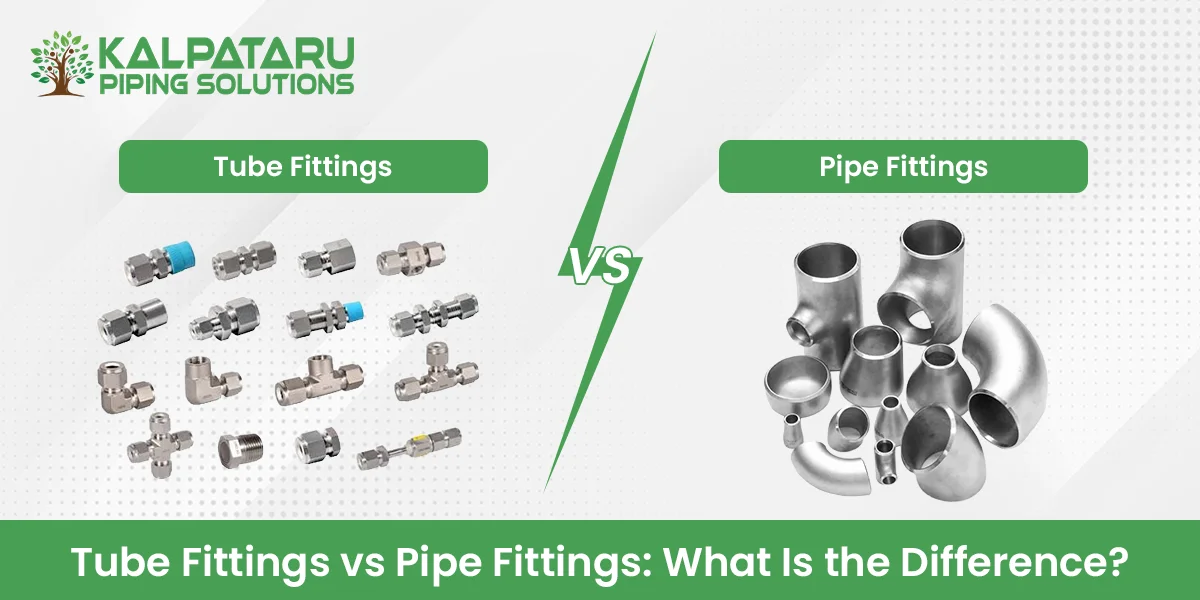
Pipe fittings vs tube fittings are often confused phrases that are used interchangeably by buyers. However, although the terms sound alike, they do not refer to the same objects, as each of these is of different dimensions and joins in different ways. There are differences in the type of use, shape, and connection methods, as well as the dimensions of pipes and tubes. In this article, useful details about pipe and tube fittings and how to distinguish between them are given.
Kalpataru Piping Solution manufactures pipe fittings in stainless steel, duplex, super duplex, and nickel alloy types, providing various piping solutions. The guide presents the basic differences between pipe fittings and tube fittings, explains the steps of sizing and connecting these two methods, and describes how to tell pipe fittings from tube fittings.
What Is a Pipe Fitting
A pipe fitting refers to a device that is utilized in changing directions, diverging, reducing, or terminating fluid flow through a rigid piping system. A common misconception regarding pipe fittings is the issue of pipe sizing. Pipe is sized using Nominal Pipe Size, and in addition to Nominal Pipe Size, pipe also includes a schedule, thus making it important to understand the two concepts. Since the Nominal Pipe Size is not the actual measured size of the pi
For the full breakdown of pipe fitting types, including elbows, tees, reducers, and couplings, our guide to types of industrial pipe fittings covers that in detail.
What Is a Tube Fitting
A tube fitting can also refer to the equipment that connects sections of a tube. Tube fittings are usually connected using a compression or ferrule mechanism instead of welding, which is different from how most pipe fittings are joined. , and this is different from the pipe fitting process. Tube size is different from pipe size as tube size is determined by factors like outside diameter, wall thickness, and gauge, depending on the length of the piece. The reason why it is important is that tube fittings adhere to tighter tolerances in manufacturing than pipe fittings. One important point about these kinds of fittings is that they are called different names, including instrumentation fittings and compression fittings, depending on suppliers and sources.
Pipe Fittings vs Tube Fittings Comparison
|
Attribute |
Pipe Fittings |
Tube Fittings |
|
Sizing basis |
Nominal Pipe Size NPS and schedule number |
Actual outside diameter and wall thickness or gauge |
|
Typical connection method |
Welding such as butt weld or socket weld, or threading |
Compression or ferrule type mechanical connection |
|
Dimensional precision |
Nominal reference size rather than exact measured outside diameter |
Precise and tightly toleranced outside diameter and wall thickness |
|
Typical bore size range |
Small bore through large bore process piping |
Mostly small bore instrumentation and control lines |
|
Common materials |
Carbon steel, stainless steel, alloy steel |
Stainless steel, brass, copper, and some plastics |
|
Ease of disassembly |
Usually requires cutting or unthreading, not quick to reconfigure |
Built for repeated disconnection and reassembly by hand |
|
Typical applications |
Process piping, oil and gas, water treatment, structural piping systems |
Instrumentation, pneumatic and hydraulic control lines, laboratory and analytical equipment |
How Each One Actually Connects
Pipe fittings rely on welding for permanent, high-integrity joints in process piping, or threading where the line runs at lower pressure and does not need the same level of joint strength. Tube fittings work differently. A compression nut and ferrule, sometimes called a bite-type ring, gets tightened down onto the tube surface and forms a leak-tight mechanical seal without any heat or welding equipment involved. This is the whole reason tube fittings dominate instrumentation work. A technician can disconnect and reconnect a tube fitting by hand during calibration or troubleshooting without shutting down a weld crew or waiting for a hot work permit.
Sizing Systems Explained
Pipe sizing runs on NPS and schedule. The nominal size is a standardized reference number, not a literal outside diameter, and schedule indicates wall thickness, so a higher schedule number at the same nominal size means a thicker wall. Tube sizing works differently. Tube is ordered by its actual outside diameter and wall thickness, and unlike pipe, the stated numbers are close to the true measured dimensions of the part. This one distinction, nominal versus actual sizing, is behind most of the mix-ups that happen when someone tries to substitute a tube fitting for a pipe fitting or the other way around.
Where Each One Is Actually Used
Both fitting categories can be found in the same industrial facility, but they usually serve different parts of the system.
|
Industry or System |
Pipe Fittings |
Tube Fittings |
|
Oil and gas |
Process piping, utility lines and fluid transport |
Instrumentation, measurement and control lines |
|
Petrochemical |
Process piping and plant utility systems |
Sampling, instrumentation and analytical systems |
|
Power generation |
Steam, water, fuel and process piping |
Instrumentation and control systems |
|
Water treatment |
Main process and utility piping |
Dosing, measurement and instrumentation |
|
Hydraulic systems |
Larger process or utility piping where applicable |
Hydraulic tubing and control connections |
|
Pneumatic systems |
Main air distribution systems |
Instrument air and actuator connections |
|
Food and pharmaceutical |
Process piping |
Instrumentation and analytical connections |
|
Laboratory and analytical systems |
Supporting process or utility piping |
Small bore tubing and analytical equipment |
The two systems are therefore not competing products in every situation. In many plants, pipe fittings form the main process piping network while tube fittings connect the instruments that monitor and control that network. For a closer look at where pipe fittings specifically get used across industrial sectors, our guide on how to choose a reliable pipe fittings manufacturer for industrial applications is a useful next read.
Which One Does Your Project Actually Need
- Choose pipe fittings if the line is large bore, the connection is meant to be permanent or rarely disturbed, and the application involves bulk fluid or gas transport at process scale.
- Choose tube fittings if the line is small bore, the connection needs to be taken apart and put back together during normal operation or maintenance, and the application is instrumentation, control, or analytical work rather than bulk transport.
- When in doubt, look at how the project specification describes sizing. If it references NPS and schedule, that is a pipe fittings requirement. If it references outside diameter and wall thickness or gauge, that is a tube fittings requirement.
If your requirement is for industrial pipe fittings, you can explore the complete pipe fittings range from Kalpataru Piping Solution.
Frequently Asked Questions
Closing
Tube fittings and pipe fittings both play an important role in industrial systems; they are just built for different jobs. If your project involves large bore process piping, Kalpataru Piping Solution supplies industrial pipe fittings across stainless steel, duplex, super duplex, and nickel alloy grades to match your specification. Explore our full range of pipe fittings or get in touch with our team if you want help confirming which grade and configuration fits your project.
Enquire Now
Related Blogs
What is Stainless Steel Valve?
What Is Monel Alloy? Composition, Properties & Uses (Guide)