
Why Alloy 20 vs. SS316L / SS317L?
|
Property |
Alloy 20 (N08020) |
SS316L |
SS317L |
|
Nickel Content |
32–38% |
10–14% |
11–15% |
|
Molybdenum Content |
2.0–3.0% |
2.0–3.0% |
3.0–4.0% |
|
Copper Content |
3.0–4.0% |
None |
None |
|
Niobium Stabilized |
Yes (8×C min) |
No |
No |
|
Sulfuric Acid Resistance |
Excellent (all concentrations) |
Limited (dilute only) |
Moderate |
|
Phosphoric Acid Resistance |
Excellent |
Poor |
Moderate |
|
Chloride SCC Resistance |
Very Good |
Moderate |
Moderate |
|
Intergranular Corrosion Resistance |
Excellent (Nb-stabilized) |
Good (low carbon) |
Good (low carbon) |
|
Max Service Temp (Acid Service) |
315°C / 600°F |
260°C / 500°F |
260°C / 500°F |
|
Relative Cost |
Higher |
Baseline |
+15–20% vs 316L |
Alloy 20 Valves Material Grade
Alloy 20 Valves Technical Specifications
|
Parameter |
Specification |
|
Material |
Alloy 20 / 20Cb-3 |
|
Wrought UNS No. |
N08020 |
|
Cast UNS No. |
N08007 |
|
Cast Designation |
ASTM A351 Grade CN7M |
|
Wrought Designation |
20Cb-3 (UNS N09020) |
|
Forging Designation |
ASTM A182 Grade F20 |
|
Casting Standards |
ASTM A351, ASTM A743, ASTM A744 |
|
Valve Body Design |
ASME B16.34, API 600, BS 1414 |
|
Face-to-Face Dimensions |
ASME B16.10 |
|
Flange Dimensions |
ASME B16.5 (NPS 1/2–24), ASME B16.47 (NPS 26–60) |
|
Butt Weld Ends |
ASME B16.25 |
|
Pressure Class |
150#, 300#, 600#, 800#, 1500#, 2500# |
|
Size Range |
1/8″ to 12″ (standard); up to 24″ on request |
|
Working Pressure |
Up to 6,000 PSIG (at ambient) |
|
Temperature Range |
-73°C to +315°C (-100°F to +600°F) |
|
End Connections |
Flanged RF/RTJ, BW, SW, NPT M/F, Dual Ferrule |
|
Seat / Seal Material |
PTFE (to 200°C), Grafoil (to 500°C), Metal CN7M |
|
Stem Packing |
PTFE V-ring, Grafoil ribbon |
|
Actuation |
Manual (handwheel / lever), Pneumatic, Electric |
|
Testing |
API 598, BS EN 12266-1 |
|
Shell Test |
1.5× WP (API 598 Hydrostatic) |
|
Seat Test |
1.1× WP (API 598 Low Pressure Air + High Pressure Hydro) |
|
Finish |
Shot-blasted, Polished (Ra 0.8μm or better on request) |
|
MTC |
EN 10204 Type 3.1 / 3.2 |
Pressure-Temperature (P-T) Ratings — Alloy 20 / CN7M Valves (ASME B16.34)
|
Temperature |
Class 150 |
Class 300 |
Class 600 |
Class 800 |
Class 1500 |
Class 2500 |
|
-29°C to 38°C (-20 to 100°F) |
275 PSI |
720 PSI |
1,440 PSI |
1,920 PSI |
3,600 PSI |
6,000 PSI |
|
100°C (212°F) |
235 PSI |
620 PSI |
1,240 PSI |
1,655 PSI |
3,100 PSI |
5,170 PSI |
|
150°C (300°F) |
215 PSI |
570 PSI |
1,140 PSI |
1,520 PSI |
2,850 PSI |
4,750 PSI |
|
200°C (400°F) |
195 PSI |
520 PSI |
1,035 PSI |
1,380 PSI |
2,590 PSI |
4,315 PSI |
|
260°C (500°F) |
170 PSI |
455 PSI |
910 PSI |
1,215 PSI |
2,275 PSI |
3,795 PSI |
|
315°C (600°F) |
140 PSI |
375 PSI |
750 PSI |
1,000 PSI |
1,875 PSI |
3,125 PSI |
P-T values are indicative for Alloy 20 wrought bodies per ASME B16.34. Verify against actual valve design for critical service.
Types of Alloy 20 Valves
1. Alloy 20 Ball Valves
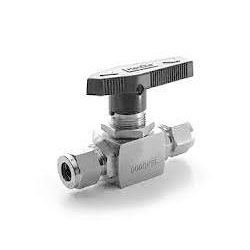
The most frequently specified Alloy 20 valves in chemical plants. Quarter-turn operation gives fast, bubble-tight shutoff in sulfuric acid, phosphoric acid, and chlorinated services. Available in full-bore and reduced-bore designs, with PTFE seats for ambient service and metal-seated (CN7M) options for higher temperatures. Kalpataru supplies both standard pipeline sizes and instrumentation-grade compact designs.
View Alloy 20 Instrumentation Ball Valves
2. Alloy 20 Gate Valves
Used for full open/full close in pipeline headers and main isolation duty. The CN7M body and wedge resist uniform corrosion far better than 316SS in acid environments. Available Class 150 to 2500, flanged or BW ends, with outside screw and yoke (OS&Y) or non-rising stem. Design to API 600 / ASME B16.34.
3. Alloy 20 Globe Valves
Preferred for throttling and flow regulation in chemical dosing and recirculation lines. The plug-type disc design gives precise flow control with minimal turbulence. Alloy 20 globe valves handle corrosive media at elevated temperature better than PTFE-lined alternatives where pinholes are a concern.
4. Alloy 20 Needle Valves
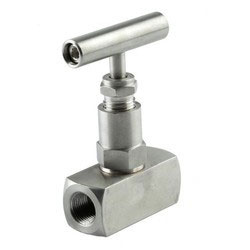
Instrumentation and process sampling lines in acid service need the precision shutoff that only a needle valve provides. Alloy 20 needle valves from Kalpataru are CNC-machined from 20Cb-3 bar stock for consistent Cv and zero-leak performance. Available with NPT, dual ferrule, or SW ends in 1/8″ to 2″ sizes.
5. Alloy 20 Check Valves (NRV)
Prevents backflow in corrosive liquid and slurry lines. Available in swing check, piston (lift) check, and dual-plate wafer designs. CN7M cast bodies with Alloy 20 disc and seat rings provide corrosion resistance matching the upstream piping. Suitable for horizontal and vertical installations.
6. Alloy 20 Manifold Valves
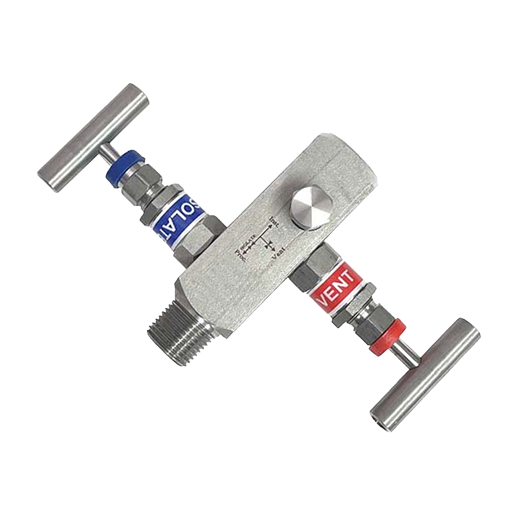
Instrumentation manifolds in 2-valve, 3-valve, and 5-valve configurations for pressure transmitter isolation, equalizing, and venting in acid services. Body, block valves, and vent/drain all machined from solid 20Cb-3 bar. Available with NPT or dual-ferrule connections.
7. Alloy 20 Monoflange Valves
Combines isolation and instrument connection in a single compact body, replacing traditional 3-piece impulse line assemblies. Ideal for corrosive services where minimizing leak paths is critical. Saves weight and eliminates potential failure points.
8. Alloy 20 Butterfly Valves
Wafer and lug-style designs for larger diameter lines (DN50–DN600) in dilute acid, FGD systems, and cooling water with chloride content. Alloy 20 disc and stem with EPDM/PTFE-lined body for cost-effective corrosion protection. Suitable for ASME Class 150 and 300.
9. Alloy 20 Double Block & Bleed (DBB) Valves
Provides positive double isolation with a bleed/drain port between the two block valves in a single compact body. Used in chemical plant shutdown systems, pressure measurement isolation, and pipeline pigging traps where dual-barrier isolation is mandated by process safety standards.
Size, Pressure Class & End Connection Availability
Size & Pressure Class Matrix
|
Valve Type |
1/8″-1″ |
1″-2″ |
2″-6″ |
6″-12″ |
150# |
300# |
600# |
800# |
1500# |
2500# |
|
Ball Valve (Instrumentation) |
✓ |
✓ |
✓ |
— |
✓ |
✓ |
✓ |
✓ |
✓ |
✓ |
|
Gate Valve |
— |
✓ |
✓ |
✓ |
✓ |
✓ |
✓ |
✓ |
✓ |
✓ |
|
Globe Valve |
— |
✓ |
✓ |
✓ |
✓ |
✓ |
✓ |
✓ |
✓ |
— |
|
Needle Valve |
✓ |
✓ |
— |
— |
— |
— |
✓ |
✓ |
✓ |
✓ |
|
Check Valve |
— |
✓ |
✓ |
✓ |
✓ |
✓ |
✓ |
✓ |
✓ |
✓ |
|
Manifold Valve (2V/3V/5V) |
✓ |
✓ |
— |
— |
— |
— |
✓ |
✓ |
✓ |
✔ |
|
Monoflange Valve |
✓ |
✓ |
— |
— |
— |
— |
✓ |
✓ |
✓ |
— |
|
Butterfly Valve |
— |
✓ |
✓ |
✓ |
✓ |
✓ |
— |
— |
— |
— |
|
DBB Valve |
✓ |
✓ |
✓ |
— |
✔ |
✔ |
✓ |
✓ |
✓ |
✔ |
End Connection Options
|
Connection Type |
Code |
Standard |
Typical Size |
|
Raised Face Flange |
RF |
ASME B16.5 |
1/2″ to 24″ |
|
Ring Type Joint Flange |
RTJ |
ASME B16.20 |
1/2″ to 24″ |
|
Butt Weld |
BW |
ASME B16.25 |
1/2″ to 24″ |
|
Socket Weld |
SW |
ASME B16.11 |
1/2″ to 2″ |
|
Screwed NPT Male |
NPT(M) |
ASME B1.20.1 |
1/8″ to 2″ |
|
Screwed NPT Female |
NPT(F) |
ASME B1.20.1 |
1/8″ to 2″ |
|
BSP (British Standard Pipe) |
BSP |
BS EN 10226 |
1/8″ to 2″ |
|
Dual Ferrule (Compression) |
DF |
Parker/Swagelok style |
1/8″ to 1″ |
|
Hubbed Flanged |
HF |
ASME B16.36 |
2″ to 8″ |
Instrumentation Needle Valve Dimensions (Alloy 20 / CN7M)
|
Port Size |
Body Length (mm) |
Handle Width (mm) |
Cv (Flow Coeff.) |
Max WP (PSI) |
|
1/8″ NPT |
62 |
45 |
0.18 |
6,000 |
|
1/4″ NPT |
74 |
52 |
0.24 |
6,000 |
|
3/8″ NPT |
85 |
60 |
0.38 |
6,000 |
|
1/2″ NPT |
95 |
68 |
0.52 |
6,000 |
|
3/4″ NPT |
112 |
78 |
0.78 |
3,600 |
|
1″ NPT |
135 |
92 |
1.20 |
3,000 |
Chemical Composition — ASTM A351 CN7M / UNS N08020 (Alloy 20)
|
Element |
CN7M (Cast) ASTM A351 |
N08020 (Wrought) ASTM B462 |
Role |
|
Nickel (Ni) |
27.5–30.5% |
32.0–38.0% |
Primary corrosion resistance vs acids |
|
Chromium (Cr) |
19.0–22.0% |
19.0–21.0% |
Oxidizing acid resistance, passivation |
|
Iron (Fe) |
Balance |
Balance |
Matrix |
|
Molybdenum (Mo) |
2.0–3.0% |
2.0–3.0% |
Pitting and crevice corrosion resistance |
|
Copper (Cu) |
3.0–4.0% |
3.0–4.0% |
Resistance to reducing acids (H2SO4) |
|
Niobium (Nb/Cb) |
8×C min, 1.0% max |
8×C min |
Stabilization, prevents sensitization |
|
Carbon (C) |
0.07% max |
0.07% max |
Kept low to avoid carbide precipitation |
|
Silicon (Si) |
1.50% max |
1.00% max |
Deoxidizer |
|
Manganese (Mn) |
1.50% max |
2.00% max |
Austenite stability |
|
Phosphorus (P) |
0.04% max |
0.045% max |
Impurity control |
|
Sulfur (S) |
0.04% max |
0.035% max |
Impurity control |
Alloy 20 Valves Equivalent Grades
Engineers frequently search for alloy 20 valves equivalent grades when sourcing from different markets or specifying multi-source projects. The table below maps Alloy 20 to its international equivalents:
|
Designation System |
Grade / Designation |
Standard |
|
UNS (Wrought) |
N08020 |
ASTM / ASME |
|
UNS (Cast) |
N08007 |
ASTM / ASME |
|
Common Trade Name |
20Cb-3 |
Carpenter / Rolled Alloys |
|
ASTM Cast Grade |
CN7M |
ASTM A351, A743, A744 |
|
ASTM Wrought Bar/Plate |
B462, B464, B472 |
ASTM |
|
ASTM Forging |
A182 Grade F20 |
ASTM |
|
ASTM Pipe |
B729 (seamless) |
ASTM |
|
EN / DIN Equivalent |
No direct DIN equivalent |
— use UNS N08020 |
|
ISO Equivalent |
NiCr20CuMo (approx.) |
ISO 9723 |
|
JIS Equivalent |
NCF 020 (approx.) |
JIS |
|
Werkstoff Nr. (approx.) |
2.4660 |
DIN (non-official) |
Mechanical Properties — Alloy 20 / CN7M
|
Property |
CN7M Cast (Min.) |
N08020 Wrought (Min.) |
Test Method |
|
Tensile Strength |
485 MPa (70 ksi) |
551 MPa (80 ksi) |
ASTM E8 |
|
Yield Strength (0.2% offset) |
207 MPa (30 ksi) |
241 MPa (35 ksi) |
ASTM E8 |
|
Elongation |
30% min |
30% min |
ASTM E8 |
|
Hardness (Brinell) |
150 HB max |
200 HB max |
ASTM E10 |
|
Hardness (Rockwell B) |
88 HRB max |
95 HRB max |
ASTM E18 |
|
Impact Strength (Charpy) |
54 J (40 ft-lb) min |
68 J (50 ft-lb) min |
ASTM E23 |
|
Density |
8.05 g/cm³ |
8.08 g/cm³ |
— |
|
Modulus of Elasticity |
196 GPa (28.4 ×10⁶ psi) |
196 GPa |
— |
|
Thermal Expansion (20–100°C) |
14.0 μm/m·°C |
14.7 μm/m·°C |
— |
|
Thermal Conductivity (20°C) |
12.8 W/m·K |
12.8 W/m·K |
— |
Corrosion Resistance Data — Alloy 20 Valve vs Common Process Media
|
Process Medium |
Concentration |
Temperature |
Alloy 20 / CN7M Rating |
|
Sulfuric Acid (H2SO4) |
All concentrations (0–100%) |
Up to 60°C |
Excellent |
|
Sulfuric Acid (H2SO4) |
10–80% |
60–100°C |
Very Good |
|
Phosphoric Acid (H3PO4) |
10–85% |
Up to 80°C |
Excellent |
|
Nitric Acid (HNO3) |
Up to 65% |
Up to 60°C |
Good |
|
Hydrochloric Acid (HCl) |
Any |
Any |
NOT SUITABLE |
|
Hydrofluoric Acid (HF) |
Any |
Any |
NOT SUITABLE |
|
Acetic Acid (CH3COOH) |
All |
Up to 80°C |
Excellent |
|
Chlorides (NaCl, MgCl2) |
Dilute to moderate |
Ambient |
Very Good |
|
Seawater |
— |
Ambient to 60°C |
Good |
|
Caustic Soda (NaOH) |
Up to 50% |
Ambient |
Good |
|
Sodium Hypochlorite (bleach) |
Up to 10% |
Ambient |
Good |
|
Ammonium Sulfate |
All |
Up to 60°C |
Excellent |
|
FGD Scrubber Liquor |
Mixed acid |
Up to 80°C |
Very Good |
|
Fatty Acids / Organic Acids |
All |
Up to 100°C |
Excellent |
Alloy 20 is specifically engineered for sulfuric acid in all concentrations — its defining application advantage over any standard stainless steel.
Alloy 20 Valves Applications by Industry
1. Sulfuric Acid & Chemical Processing Plants
Alloy 20 valves were originally developed for sulfuric acid service — and this remains their primary calling. In acid alkylation units, pickling lines, acid dilution stations, and H2SO4 storage systems, Alloy 20 outperforms 316SS and even Hastelloy B-2 in intermediate acid concentrations (20–80%). The copper addition gives it a unique mechanism for resisting reducing acid attack that purely chromium-based alloys lack.
Key products: Alloy 20 ball valves, gate valves, needle valves
2. Pharmaceutical & API Manufacturing
GMP pharmaceutical plants use Alloy 20 in synthesis reactors, crystallizers, and distillation columns where sulfuric or phosphoric acid is used as a reaction catalyst or pH control agent. Non-magnetic and non-toxic, the alloy meets FDA and GMP hygiene requirements. Its low carbon content (0.07% max) prevents contamination from corrosion products.
Key products: Globe valves, manifold valves
3. Fertilizer Plants (NPK, SSP, DAP)
Phosphoric acid production (for fertilizers) is one of the toughest corrosion environments because the acid contains fluorides and chlorides that attack most materials. Alloy 20 valves in wet-process phosphoric acid plants (1/4 to 1/2 the corrosion rate of 316SS), phosphate slurry piping, and ammonium sulfate crystallizer loops deliver long service life without frequent replacement.
Key products: Check valves, ball valves
4. Food, Beverage & Edible Oil Processing
Alloy 20 is non-toxic, non-magnetic, and resistant to organic acids (citric, acetic, tartaric). Used in pickle brine handling, vinegar production, citric acid concentration, and edible oil refining where equipment contacts acidic food streams. The alloy’s polishability to Ra <0.8 μm meets 3-A Sanitary Standards.
Key products: Ball valves, globe valves
5. Flue Gas Desulfurization (FGD) & Power Plants
FGD scrubber systems handling SO2-laden flue gas produce highly corrosive slurries containing sulfuric acid, chlorides, and fluorides at elevated temperatures. Alloy 20 valves in absorber recirculation pumps, spray header isolation, and gypsum dewatering lines outlast rubber-lined and 316SS alternatives.
Key products: Butterfly valves, gate valves
6. Marine & Offshore Chemical Injection
Offshore platforms use Alloy 20 valve in chemical injection systems (scale inhibitor, corrosion inhibitor, methanol) where the fluid being injected is corrosive and ambient chloride exposure is continuous. Manifold valves and needle valves are particularly specified for HP chemical injection headers.
7. Pulp, Paper & Chlorate Manufacturing
Bleaching lines using chlorine dioxide and sodium hypochlorite, and chlorate electrolytic cells, expose valves to oxidizing chloride environments that cause rapid failure in stainless steel. Alloy 20 valve are specified for bleach plant caustic/acid service and chlorate mother liquor handling, where service intervals can be extended from months to years.
Key products: Check valves, ball valves
Standards, Testing & Quality Certifications
Design & Material Standards
|
Standard |
Scope |
Applies To |
|
ASME B16.34 |
Pressure-Temperature ratings, design, materials |
All valve types |
|
API 600 |
Steel gate valves, flanged ends |
Gate Valves |
|
BS 1414 |
Steel gate valves, flanged & BW ends |
Gate Valves |
|
ASME B16.10 |
Face-to-face and end-to-end dimensions |
All valve types |
|
ASME B16.5 |
Pipe flanges and fittings (NPS 1/2″ to 24″) |
Flanged Valves |
|
ASME B16.25 |
Butt welding ends |
BW Valves |
|
ASTM A351 |
Alloy 20 castings (CN7M) |
Valve Bodies, Bonnets |
|
ASTM B462 |
Alloy 20 forgings (N08020) |
Valve Bodies, Flanges |
|
NACE MR0175 / ISO 15156 |
Sour service material requirements |
Sour/H2S Service |
|
PED 2014/68/EU |
European Pressure Equipment Directive |
CE-Marked Valves |
Testing Standards
|
Test |
Standard |
Requirement |
|
Shell (Body) Pressure Test |
API 598 / BS EN 12266-1 |
1.5× WP hydrostatic, no leakage |
|
Seat Leakage Test (Low Pressure) |
API 598 |
0.6 MPa (80 PSI) air, rate D or better |
|
Seat Leakage Test (High Pressure) |
API 598 |
1.1× WP hydrostatic |
|
Backseat Test |
API 598 |
1.1× WP hydrostatic |
|
PMI (Positive Material Identification) |
ASTM A751 / XRF |
100% on Alloy 20 components |
|
Hardness Test |
ASTM E10 / E18 |
Per NACE MR0175 limits |
|
Radiographic Test (RT) |
ASME Sec. V / ASTM E94 |
On request or per spec |
|
Liquid Penetrant Test (PT) |
ASME Sec. V |
Weld and machined surfaces |
Certifications
- ISO 9001:2015 — Quality Management System
- PED 2014/68/EU — CE Mark for European market
- NACE MR0175 / ISO 15156 — Sour service compliance
- EN 10204 Type 3.1 — Mill Test Report (standard supply)
- EN 10204 Type 3.2 — Third-party witnessed MTC (on request)
- API Monogram — On selected valve types
8-Stage Quality Inspection Protocol
- Raw Material Verification — Chemical analysis (OES/XRF) and heat number traceability against cast/wrought certificates before machining begins.
- Dimensional Inspection (In-Process) — All critical dimensions (bore, seat angle, stem diameter, thread pitch) checked against engineering drawings at each machining stage.
- Visual & Surface Examination — Body and trim inspected for casting defects, porosity, laps, cracks; surface finish verified (Ra measurement).
- Liquid Penetrant Test (PT) — Welds, flanges, and machined seats checked per ASME Section V to detect surface-breaking defects.
- PMI (Positive Material Identification) — 100% XRF verification of all Alloy 20 components to confirm grade before assembly.
- Assembly & Functional Check — Valve assembled per drawing; actuation torque, travel stops, and packing gland checked.
- Hydrostatic Shell & Seat Test — API 598 shell test at 1.5× WP; seat test at 1.1× WP. Test witnessed by QC inspector; results recorded on test certificates.
- Final Documentation Package — EN 10204 Type 3.1 MTC, test reports, dimensional report, PMI certificates, pressure test certificates, and packing list compiled and issued with each shipment.
Why Choose Kalpataru Piping Solution for Alloy 20 Valves?
Complete Alloy 20 Valve Portfolio Under One Roof
Most suppliers offer one or two Alloy 20 valve types. Kalpataru carries the full range — from instrumentation-grade needle valves to large-bore gate valves — all in the same quality and documentation standard:
- Alloy 20 Instrumentation Ball Valves — 1/8″ to 2″, up to 6,000 PSIG
- Alloy 20 Needle Valves — NPT / Dual Ferrule / SW ends
- Alloy 20 Manifold Valves — 2V, 3V, 5V instrumentation manifolds
- Alloy 20 Tubes — Seamless & welded per ASTM B729
- Alloy 20 Instrumentation Tube Fittings — Compression fittings for instrument lines
- Gate Valves, Globe Valves, Check Valves in Alloy 20 / CN7M on request
Genuine ASTM A351 CN7M Material — Every Time
Alloy 20 is frequently counterfeited with SS316 or SS317L castings. At Kalpataru, every valve body is 100% PMI-verified (XRF gun test) on the shop floor before assembly. You receive the XRF test report as part of your standard documentation package — no extra charge, no waiting.
Competitive Alloy 20 Valve Price with Full Traceability
Our direct sourcing from certified foundries in India and Taiwan, combined with in-house CNC machining and testing, keeps our alloy 20 valve price 15–25% below European or North American valve manufacturers — without sacrificing documentation or testing standards. We accept L/C, D/A, D/P, T/T, and Western Union payment terms.
Export to 30+ Countries with Proper Shipping Documentation
Alloy 20 valves have been exported to chemical plants, pharma facilities, and fertilizer plants across:
USA, UAE, Saudi Arabia, Qatar, Oman, Kuwait, Bahrain, Germany, UK, France, Netherlands, Italy, Spain, Belgium, Poland, Australia, New Zealand, South Africa, Nigeria, Kenya, Egypt, Singapore, Malaysia, Indonesia, Thailand, Vietnam, South Korea, Japan, Canada, Brazil, Mexico
All export shipments include ECGC documentation, packing in wooden export crates, and country of origin certificates (COO) as required.
Faster Than You Expect
|
Order Type |
Lead Time |
|
Standard sizes (1/4″–2″, common pressure classes) |
2–3 weeks |
|
Non-standard sizes or special pressure class |
4–6 weeks |
|
Bulk orders (>100 valves) |
4–8 weeks (by order) |
|
Emergency / shutdown supply |
5–7 days (ex-stock, limited sizes) |
Related Products from Kalpataru Piping Solution
|
Product |
Material |
Link |
|
Alloy 20 Instrumentation Ball Valves |
CN7M / UNS N08020 |
|
|
Alloy 20 Needle Valves |
CN7M / 20Cb-3 |
|
|
Alloy 20 Manifold Valves (2V/3V/5V) |
CN7M / 20Cb-3 |
|
|
Alloy 20 Tubes |
ASTM B729 / N08020 |
|
|
Alloy 20 Instrumentation Tube Fittings |
N08020 |
|
|
Monoflange Valves |
Alloy 20 / Duplex / SS |
|
|
All Ball Valves |
Multi-material range |
|
|
All Gate Valves |
Multi-material range |
|
|
All Globe Valves |
Multi-material range |
|
|
All Needle Valves |
Multi-material range |
|
|
All Manifold Valves |
Multi-material range |
|
|
All Check Valves |
Multi-material range |
|
|
Nickel Alloy 200 Ball Valves |
UNS N02200 |
|
|
Nickel Alloy 201 Ball Valves |
UNS N02201 |
|
|
Nickel Alloy 200 Needle Valves |
UNS N02200 |
|
|
Nickel Alloy 201 Needle Valves |
UNS N02201 |
|
|
Nickel Alloy 200 Manifold Valves |
UNS N02200 |
|
|
Full Product Catalogue |
All piping products |