What Is Monel Alloy? Understanding the Basics
Pipe fittings are components used to connect pipe and pipe fitting runs, change direction, branch a line, or adjust size and flow. They create a sealed path so media can move safely through a system. You’ll see them in water supply, fire protection, HVAC, oil and gas, and process plants.
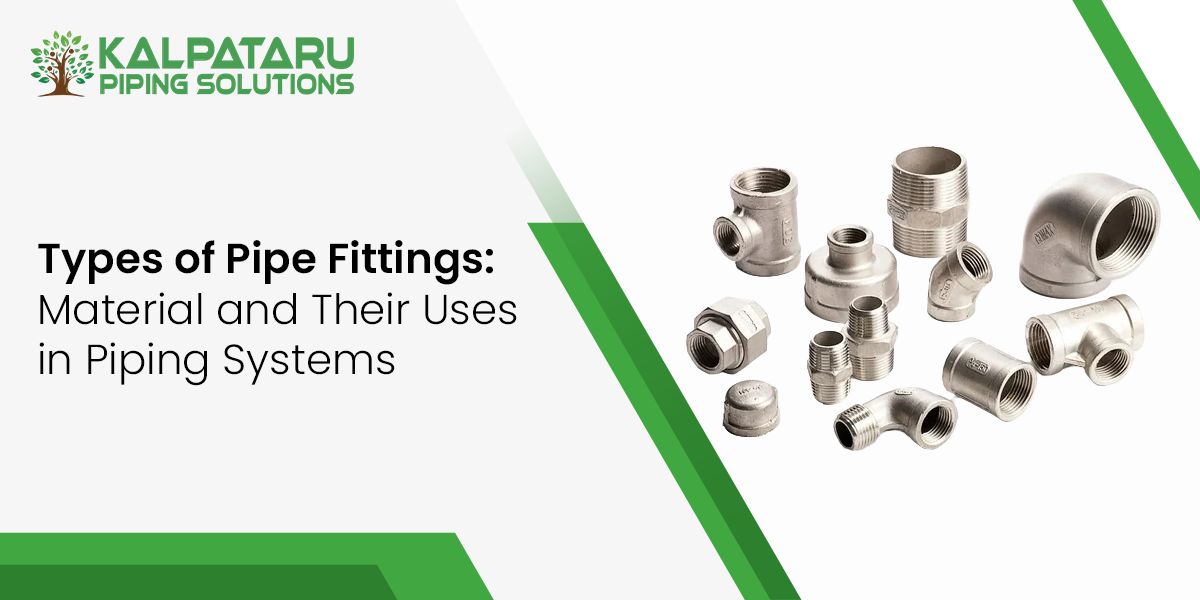
Fittings come in many shapes and standards. Common types of pipe fittings include elbows, tees, reducers, caps, couplings, unions, crosses, and outlets. They’re produced in a wide range of pipe fitting materials to match pressure, temperature, and corrosion needs: stainless steel, duplex and super duplex steel, Monel, Inconel, nickel alloys, and copper-nickel. Each grade offers different strength and corrosion resistance, helping you select the right part for your application and budget, this is the core of what is pipe fittings all about.
Enquire Now
Types of Pipe Fittings: Common Pipe Fitting Names
Below are the main types of pipe fittings used across water supply, HVAC, oil and gas, and process plants. Each block explains the use case, key variants, and typical pipe fitting materials. Use this as a quick reference for pipe fittings names and selection.
- Elbows: Elbows change flow direction. Standard angles are 45° and 90°. Long radius elbows reduce pressure drop. Short radius elbows save space. You’ll find butt-weld, socket-weld, and threaded options. Materials include stainless steel, carbon steel, duplex, super duplex, Monel, Inconel, nickel alloy, and copper-nickel. Pick by pressure class, temperature, and media. Correct sizing keeps velocity and erosion in check.
- Tees: Tees split or combine flow. Picture a “T” with three openings. Use equal tees for same-size branches. Use reducing tees to connect a smaller branch. Available as butt-weld, socket-weld, or threaded. Common in plumbing headers, fire lines, and chemical loops. Choose the grade that matches corrosion needs and codes such as ASME B16.9 or B16.11.
- Reducers: Reducers connect different pipe sizes. Concentric reducers keep the centerline straight. Eccentric reducers prevent air pockets on horizontal runs. They smooth the transition to protect pumps and meters. Produced in stainless, carbon steel, duplex, and nickel alloys. Match schedule and thickness to the upstream pipe and process conditions.
- Couplings: Couplings join two pipes in a straight run. Use full couplings for permanent joints. Use half couplings for branch connections on a header. Threaded and socket-weld styles are common for small bore. Grooved couplings speed up installation on fire protection lines. Select by pressure rating and media compatibility to avoid leaks.
- Caps: Caps close the end of a line. They protect a system during testing or isolate a segment for future tie-ins. Butt-weld and threaded caps are standard. Materials mirror the host pipe for weldability and service life. Proper end closure improves safety during hydrotest and maintenance.
- Unions: Unions allow fast disassembly without cutting the pipe. A union has two end pieces and a central nut that draws the ends together. Ideal for meters, valves, and equipment that needs routine service. Offered in threaded and socket-weld ends. Pick a material and seat design that seals under your pressure and temperature range.
- Nipples: Nipples are short lengths of pipe with male threads on one or both ends. They connect fittings, valves, and instruments. Close, hex, and reducing nipples are common types. Order by schedule, length, and thread standard such as NPT or BSP. Use the same alloy as the system to avoid galvanic issues.
- Cross: Cross fittings create four-way connections. They feed multiple branches from a central point. Used in sprinkler mains, utility manifolds, and heating circuits. Because four paths meet, support and alignment are important. Choose the right class to handle combined loads.
- Stub Ends: Stub ends are used with lap joint flanges. The stub end provides the sealing face while the flange ring backs it up. This setup reduces cost on high-alloy systems since the backing flange can be carbon steel. Handy where frequent dismantling is needed. Available in short and long patterns to suit piping geometry.
- Flanges: Flanges bolt two components together. They allow removal of valves, spools, and equipment. Types include weld neck, slip-on, socket-weld, lap joint, threaded, and blind. Face options include raised face and RTJ. Ratings follow ASME classes or PN series. Material choice must match corrosion and temperature needs.
Need fast support?
We supply elbows, tees, reducers, couplings, flanges, and caps in standard and custom sizes. Request a same-day quote from Kalpataru Piping Solutions.
Pipe Fitting Materials Used in Industrial Applications
Choosing the right pipe fitting materials is the first step to a safe, long-lasting system. Different types of pipe fittings like elbows, tees, reducers, flanges need alloys that match pressure, temperature, and corrosion risk. Below we outline the main options used in pipe and pipe fitting projects: stainless steel, duplex, super duplex, Monel, Inconel, nickel, and copper-nickel, with typical uses and selection tips.
- Stainless Steel Pipe Fittings: Stainless steel fittings handle corrosion, heat, and hygiene. Grades like 304/304L and 316/316L suit water, food, and chemical duty. They cover common pipe fittings names such as elbows, tees, reducers, and flanges. ASME/ASTM sizes match most pipe and pipe fitting lines.
- Duplex Steel Pipe Fittings: Duplex steel blends strength with chloride resistance. It works well in seawater, pulp and paper, and desalination plants. Duplex elbows, tees, and couplings limit wall thickness while keeping pressure ratings high. Use where standard stainless may pit or stress crack. Confirm PREN and NACE needs before finalizing pipe fitting materials.
- Super Duplex Steel Pipe Fittings: Super duplex offers higher PREN for harsh offshore and subsea duty. It resists sour gas and high-pressure brine. Super duplex reducers, flanges, and crosses support compact manifolds with fewer failures. Ideal for topside skids and injection lines. Match heat treatment and impact test data to project specs for safe service.
- Monel Pipe Fittings: Monel nickel-copper fittings stand up to salt water, caustic alkalis, and hydrofluoric acid. They keep strength from subzero to high temperatures. Monel elbows, tees, and unions are common in marine pumps and HF alkylation units. You can pick this alloy where copper or stainless would corrode fast.
- Inconel Pipe Fittings: Inconel nickel-chromium alloys tolerate extreme heat and oxidation. Typical uses include furnace manifolds, gas turbines, and petrochemical heaters. Inconel flanges, nipples, and caps hold shape under thermal cycling. Ideal for high-temperature types of pipe fittings that face creep and scaling. Confirm grade selection such as 600, 625, or 825.
- Nickel Pipe Fittings: Commercially pure nickel resists caustic soda and neutral salt solutions. It maintains ductility and magnetic stability. Nickel couplings, unions, and stub ends suit chlor-alkali plants and electronic chemical lines. Choose nickel pipe fittings when process purity matters. Check compatibility with reducing acids and set thickness per ASME B31 specs.
- Copper Nickel Pipe Fittings: Cu-Ni fittings are proven for seawater lines, condensers, and ballast systems. They combat biofouling and stress corrosion. Common pipe fittings namesinclude elbows, tees, reducers, and flanges in 90/10 or 70/30 grades. Use with compatible fasteners to prevent galvanic attack. Ideal for shipbuilding and coastal plants where uptime matters.
Need help with selection?
Share your media, temperature, pressure, and standard. We’ll size the pipe and pipe fitting set and suggest pipe fitting materials for service life and budget.Why Choose Kalpataru Piping Solution for Pipe Fittings
We keep large inventories and run high-capacity lines, so we supply pipe and pipe fitting orders fast. We offer competitive pricing and ship quality-assured parts with test certificates. We produce custom sizes and special ends to match your layout, and we welcome third-party inspection. Our range covers all major types of pipe fittings, from elbows and tees to reducers, flanges, and caps across key pipe fitting materials such as stainless, duplex, super duplex, carbon steel, copper, copper-nickel, and nickel alloys. We support shipbuilding, petrochemicals, oil and gas, HVAC, and water treatment. We export worldwide and meet international standards, making it easy to source the right pipe fittings names and grades for your project.
Conclusion: The Importance of Choosing Right Type of Pipe Fittings
Piping systems rely on correctly selected types of pipe fittings to control direction, connection, branching, and closure. Elbows change direction. Tees create branches. Reducers transition sizes. Couplings and unions connect straight runs and allow disassembly. Caps close line ends. Each component supports safe, efficient transport of fluids and gases.
Specify by service, pressure class, code, and pipe fitting materials to match your pipe and pipe fitting needs. Kalpataru Piping Solutions supplies the full range of pipe fittings names with material test certificates and custom sizes on request.
Frequently Asked Questions About Types of Pipe Fitting
There are over 10 main types, including elbows, tees, reducers, couplings, unions, crosses, caps, plugs, adaptors, and valves, each serving a specific function in piping systems.
Stainless steel and carbon steel fittings are the strongest, preferred for high-pressure and high-temperature industrial applications due to superior strength and durability.
Pipe fitting names include elbow, tee, reducer, union, coupling, cross, cap, plug, adaptor, flange, nipple, valve, bushing, and steam trap, based on their functions and shapes.
Three common pipe fittings are elbow (for changing direction), tee (for splitting or joining flow), and reducer (for connecting different pipe sizes).
Enquire Now
Related Blogs
What is Stainless Steel Valve?
What Is Monel Alloy? Composition, Properties & Uses (Guide)