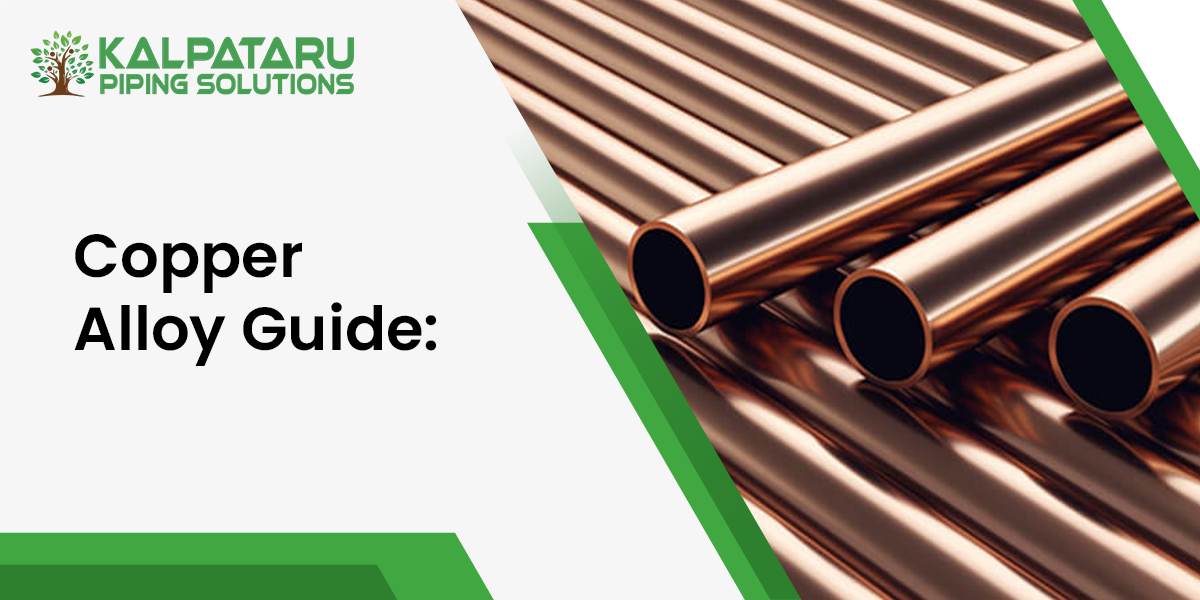
Quick answer: Copper alloys combine copper with elements such as zinc, tin, nickel, aluminium, beryllium or chromium to tune strength, corrosion resistance, wear, machinability and conductivity. Brass, bronze, copper-nickel and beryllium copper are major families, each suited to different industrial duties. |
Pure copper is valued for electrical and thermal conductivity, but industrial equipment often asks for more: higher strength, better wear resistance, reliable performance in seawater, spring behaviour, machinability or resistance to sparking. Copper alloys are how engineers keep copper’s useful characteristics while adding the properties required by the application.
The term copper alloy covers a large group of materials rather than one grade. Brass is a copper-zinc family. Bronzes include several copper-based systems. Copper-nickel is central to marine and seawater service. Beryllium copper reaches strength levels far beyond conventional copper while retaining useful conductivity.
Kalpataru Piping Solutions supplies copper-based and copper-alloy product categories including copper tubes, copper shims, brass tube fittings, copper-nickel flanges, copper-nickel pipe fittings and beryllium copper round bars.
What Is a Copper Alloy?
A copper alloy is a metal in which copper is the principal element and other elements are added in controlled amounts to create a targeted property profile. The Copper Development Association recognises major families such as brasses, bronzes, copper-nickels and high-copper alloys.
Alloying usually changes more than one property at a time. Adding zinc can improve strength and machinability but changes conductivity. Nickel can improve seawater corrosion performance. Beryllium, combined with heat treatment, can produce exceptional strength and spring properties. The best grade is therefore the one that balances the whole service requirement.
Main Types of Copper Alloys
1. Brass: Copper-Zinc Alloys
Brass is primarily copper alloyed with zinc. Different zinc levels and additional elements create families with varied strength, ductility, machinability and corrosion behaviour. Brass is widely used in valves, fittings, connectors, hardware, heat-transfer components and general engineering.
For instrumentation and connection systems, see Kalpataru’s brass tube fittings and brass tubes.
2. Bronze Families
Bronze historically refers to copper-tin alloys, but in modern engineering the term also covers families such as phosphor bronze, aluminium bronze and silicon bronze. These alloys are selected for combinations of wear resistance, strength, bearing performance, corrosion resistance and fatigue behaviour.
Phosphor bronze, for example, is widely used for springs, electrical contacts and wear components. Aluminium bronze can provide high strength and strong corrosion resistance in marine and industrial environments.
3. Copper-Nickel Alloys
Copper-nickel, often called cupronickel, is one of the most important copper-alloy families for marine and seawater service. Two common grades are UNS C70600, often called 90/10 copper-nickel, and UNS C71500, known as 70/30.
Both grades are used in seawater piping, condensers, heat exchangers, shipbuilding and offshore systems. The higher nickel content of 70/30 generally supports higher strength and resistance in more demanding flow conditions, while 90/10 is widely used for its balance of performance, fabrication and cost. For a direct comparison, read Copper Nickel 90/10 vs 70/30.
4. Beryllium Copper
Beryllium copper, also written CuBe or BeCu, is a precipitation-hardenable copper alloy known for very high strength, fatigue resistance, spring properties, non-sparking behaviour and useful electrical conductivity. UNS C17200 is one of the best-known high-strength grades.
Applications include springs, electrical contacts, aerospace and precision components, mould tooling and non-sparking tools used in controlled hazardous environments. Explore Kalpataru’s UNS C17200 beryllium copper round bars and the technical guide on Beryllium Copper C17200 properties and uses.
5. High-Copper Alloys and Copper-Chromium-Zirconium
High-copper alloys retain a high percentage of copper while using small alloy additions to improve strength or softening resistance. Copper-chromium-zirconium grades such as UNS C18150 are used where higher mechanical strength is needed without giving up too much electrical and thermal conductivity, including resistance-welding and electrical applications.
Kalpataru supplies C18150 chromium-zirconium copper round bars for specialised engineering requirements.
Copper alloy family | Typical alloying element(s) | Key property focus | Common applications |
Brass | Zinc | Machinability, formability, strength | Fittings, valves, connectors, hardware |
Phosphor bronze | Tin + phosphorus | Wear, fatigue, spring behaviour | Bushes, springs, contacts, bearings |
Aluminium bronze | Aluminium | High strength and marine corrosion resistance | Marine hardware, pumps, valves, heavy-duty components |
Copper-nickel | Nickel + iron/manganese in common grades | Seawater corrosion resistance and biofouling resistance | Marine piping, condensers, heat exchangers |
Beryllium copper | Beryllium + controlled additions | Very high strength, fatigue, non-sparking, conductivity | Springs, contacts, tooling, aerospace and precision parts |
Cu-Cr-Zr / high copper | Chromium + zirconium | Strength with useful conductivity and thermal performance | Electrical, resistance welding, high-current components |
Key Properties of Copper Alloys
- Electrical conductivity: pure copper is the benchmark, while alloying trades some conductivity for strength, wear or corrosion performance.
- Thermal conductivity: many copper alloys remain effective for heat-transfer components compared with many ferrous alloys.
- Corrosion resistance: copper-nickel and selected bronzes are especially valuable in marine and seawater environments.
- Strength: precipitation-hardened beryllium copper and aluminium bronze can reach much higher strength than pure copper.
- Formability and machinability: brass families are widely used because they can be formed and machined efficiently in appropriate tempers.
- Wear and fatigue behaviour: phosphor bronze and beryllium copper are widely used for springs, contacts and repeated-motion components.
- Non-sparking behaviour: certain copper alloys are used for tools and components where spark risk must be reduced, subject to the relevant safety standard.
Common Copper Alloy Grades
UNS grade | Common name / family | Typical use focus |
C26000 | Cartridge brass | Formed components, hardware, radiators and general brass applications |
C51000 | Phosphor bronze | Springs, contacts, wear parts and formed components |
C70600 | Copper-nickel 90/10 | Seawater piping, marine systems, condensers and heat exchangers |
C71500 | Copper-nickel 70/30 | More demanding marine and high-velocity seawater service |
C17200 | Beryllium copper / Alloy 25 | High-strength springs, contacts, tooling and precision components |
C18150 | Chromium zirconium copper | High-conductivity components requiring improved strength and softening resistance |
Grade names alone are not enough for procurement. Product form controls the applicable specification. A C17200 bar, a C70600 seamless tube and a C71500 welded pipe are supplied under different ASTM requirements and dimensional standards.
Copper Alloy Applications by Industry
- Marine and offshore: copper-nickel piping, flanges, fittings and heat-exchanger components for seawater service.
- Power generation: condenser and heat-exchanger tubing, electrical conductors and cooling systems.
- Oil and gas: selected copper-alloy instrumentation components, marine systems and non-sparking tooling applications.
- Chemical processing: corrosion-resistant piping and heat-transfer components where the process chemistry is compatible.
- Electrical and electronics: high-conductivity copper alloys, connectors, springs, contacts and resistance-welding components.
- Aerospace and defence: high-strength beryllium copper springs, precision components and specialised copper alloys.
- General engineering: bushes, bearings, wear plates, shims, fittings, valves and machined components.
How to Choose the Right Copper Alloy
- Define the dominant requirement. Is the priority conductivity, seawater corrosion resistance, wear, spring strength, machinability or heat transfer?
- Check the environment. Chlorides, seawater velocity, acids, ammonia-bearing environments and galvanic couples can change material suitability.
- Match strength to fabrication. A very high-strength temper may be harder to form or machine than a softer condition.
- Specify the product form. Tube, pipe, bar, strip, sheet, flange and fitting standards use different requirements.
- Confirm the alloy designation. Use UNS, EN/CW or another recognised designation rather than relying on trade names alone.
- Define testing and certification. Chemical analysis, mechanical tests, eddy-current or hydrostatic testing, PMI and MTC requirements depend on the product and service.
- Review joining method. Welding, brazing, soldering, flaring and mechanical connections require alloy-specific procedures and compatible filler materials.
Copper Alloy vs Pure Copper: When Is Alloying Worth It?
Pure copper is difficult to beat when maximum electrical or thermal conductivity is the priority. Alloying becomes worthwhile when the component must carry more load, resist wear, survive seawater, hold a spring shape, machine cleanly or maintain properties at higher temperature.
That trade-off is why material selection should be application-led. A seawater condenser may point toward copper-nickel, an electrical spring toward beryllium copper, and a machined connector toward a brass grade. There is no universal ‘best copper alloy’.
Final Takeaway
Copper alloys cover a remarkable range of engineering behaviour. Brass prioritises practical fabrication and machinability. Bronzes bring wear and mechanical performance. Copper-nickel is a workhorse for marine systems. Beryllium copper delivers exceptional strength and spring properties, while high-copper alloys preserve more conductivity for electrical and thermal duties.
Explore Kalpataru Piping Solutions’ copper and copper-alloy products, including copper-nickel flanges, copper-nickel fittings, copper tubes and beryllium copper products. For a project quotation, contact the team with the required grade, product form, dimensions, standard, quantity and certification package.
Frequently Asked Questions
A copper alloy is a metallic material in which copper is the principal element and one or more other elements are added to achieve properties such as higher strength, wear resistance, corrosion resistance, machinability or specialised electrical and thermal performance.
Major copper-alloy families include brass (copper-zinc), bronze families, copper-nickel, copper-beryllium and other high-copper alloys such as copper-chromium-zirconium. Each family is engineered for a different balance of conductivity, strength, corrosion resistance and fabrication behaviour.
Copper-nickel alloys such as UNS C70600 (90/10) and C71500 (70/30) are widely used in seawater, marine and heat-exchanger systems because of their corrosion and biofouling resistance. Final grade selection depends on flow conditions, pressure, temperature and system design.
Beryllium copper grades such as UNS C17200 are used where high strength, spring properties, fatigue resistance, non-sparking behaviour and useful conductivity are required, including electrical contacts, tooling, springs and specialised industrial components.
Start with the application: conductivity, corrosion environment, strength, wear, temperature and fabrication method. Then select the relevant UNS/CW grade and ASTM, EN or project specification for the required product form such as tube, bar, strip, flange or fitting.
Enquire Now
Related Blogs
What is Stainless Steel Valve?
What Is Monel Alloy? Composition, Properties & Uses (Guide)