
Brass Shims Suppliers in India
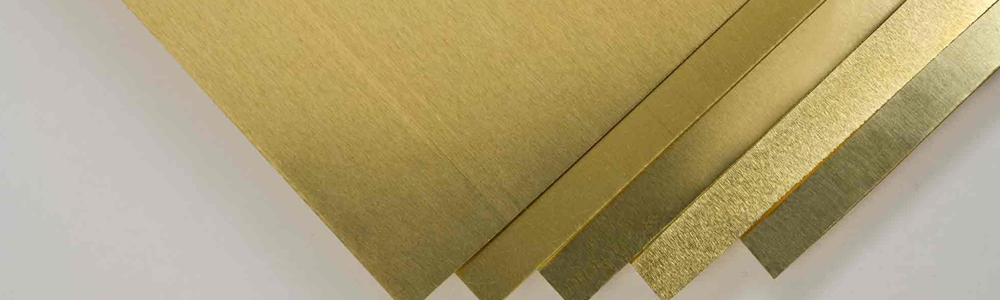
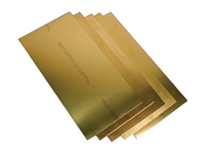
When wiring a switchgear panel, an electrical professional might use brass instead of stainless steel if electrical conductivity is crucial. Brass has a much higher conductivity than SS 304, which is why this metal is widely used in shims, spacers, and many other components in the fields of electrical and engineering industries. Still, the conductivity of brass is not the only strength of this metal designed for shims; the machinability, dimensional stability of shims, and the ability to withstand corrosion make brass an excellent material for shims.
Kalpataru Piping Solution manufactures brass shims at its Mumbai facility, including C26000 cartridge brass, a commonly used alloy containing approximately 70% copper and 30% zinc. C26000 offers good machinability and is suitable for a wide range of general engineering and industrial applications. Other copper-zinc alloys can also be supplied for applications requiring specific combinations of corrosion resistance, strength, appearance, or machinability.
Brass may not be the right material for every application. Ammonia environments and ammonium salt environments can cause specific brass types to suffer from stress corrosion cracking. When determining if brass shims should be used, the chemical environment, operating temperature, mechanical loads, and life expectancy need to be taken into account.
- Why Brass Instead of Stainless or Copper
- The Grade That Does Most of the Work: C260 Cartridge Brass
- Beyond C260: Brass Grade Range
- Brass Shim Chemical Composition of C260
- Brass Shim Specification
- Brass Shim Physical Properties
- Weight & Sizing Reference
- Where Brass Shims Actually Get Used
- Quality Assurance & Documentation
- What Drives the Price
- FAQs About Brass Shim
Why Brass Instead of Stainless or Copper
The shim material question usually comes down to three things: how corrosive the environment is, whether electrical conductivity matters, and how much machining the shim needs. Brass sits in a specific spot on that spectrum — not the best at any one property, but a genuinely useful middle ground.
Property | Brass (C260) | Stainless Steel (SS 304) | Copper (C11000) |
|---|---|---|---|
Composition | 70% Cu + 30% Zn | 18% Cr + 8% Ni | 99.9% Cu |
Conductivity (IACS) | 28% | 2% | 100% |
Corrosion Resistance | Good | Excellent | Good |
Machinability | Excellent | Fair | Fair |
Best Used For | Electrical, architectural, moderate corrosion | Chemical, high-temp, food processing | Maximum conductivity, heat sinks |
The Grade That Does Most of the Work: C260 Cartridge Brass
If you order a brass shim without specifying a grade, C26000 is almost certainly what you’ll get, and there’s a good reason it’s become the default. Cartridge brass — 70% copper, 30% zinc — hits a sweet spot of cold-working ability, deep-draw formability, moderate tensile strength, and decent corrosion resistance in water, fuel oil, gasoline, kerosene, and alcohol environments.
- Electrical conductivity around 28% IACS — roughly 14 times higher than SS 304’s 2%, which is why it’s the standard choice for electrical panel spacers and bus bar applications
- Machines and cuts cleanly — noticeably easier to work with than stainless, faster turnaround on custom orders
- Available in HR (hot rolled), CR (cold rolled), annealed, half hard, quarter hard, and spring hard tempers
- Foil down to 0.05mm, sheet up to 3.0mm as standard stock (thicker plate available on request)
Beyond C260: Brass Grade Range
C260 covers most orders, but we stock the full copper-zinc family for specific requirements:
UNS Grade | Common Name | Composition | Best For |
|---|---|---|---|
C21000 | Gilding Metal | 95% Cu + 5% Zn | Maximum corrosion resistance, decorative applications |
C22000 | Commercial Bronze | 90% Cu + 10% Zn | Good corrosion resistance, architectural use |
C22600 | Jewelry Bronze | 87.5% Cu + 12.5% Zn | Good formability, decorative parts |
C23000 | Red Brass | 85% Cu + 15% Zn | Excellent corrosion resistance in water and steam |
C24000 | Low Brass | 80% Cu + 20% Zn | Good ductility, flexible applications |
C26000 | Cartridge Brass | 70% Cu + 30% Zn | Most common shim grade — best formability and corrosion resistance |
C26800 | Yellow Brass | 65% Cu + 35% Zn | Good machinability, general purpose |
C27200 | Yellow Brass | 63% Cu + 37% Zn | Cost-effective, good mechanical properties |
Brass Shim Chemical Composition of C260 (%)
Element | Range |
|---|---|
Copper (Cu) | 68.5 – 71.5 |
Zinc (Zn) | Remainder (~30%) |
Iron (Fe, max) | 0.05 |
Lead (Pb, max) | 0.07 |
Brass Shim Specification
Parameter | Details |
|---|---|
Governing Standard | ASTM B36 / ASME SB36 |
Grades Stocked | C21000, C22000, C22600, C23000, C24000, C26000, C26800, C27200 |
Thickness | 0.05mm to 3.0mm (above on request) |
Width | 3.2mm to 1500mm |
Length | 2000mm, 2440mm, 3000mm, 5800mm, 6000mm and custom |
Temper / Condition | HR, CR, annealed, half hard, quarter hard, spring hard |
Finish | No.1, 2B, 2D, 2H, 2R, No.4, hairline, Scotch Brite, satin, No.8, BA |
Form | Shim sheet, shim roll, foil shim, precut shim, custom cut |
Brass Shim Physical Properties
Property | Value |
|---|---|
Melting Point (Liquidus) | 1650°F |
Melting Point (Solidus) | 1630°F |
Density | 0.307 lb/in³ at 68°F |
Electrical Resistivity | 39.90 ohms-cmil/ft at 68°F |
Electrical Conductivity | 26% IACS at 68°F |
Thermal Conductivity | 67 Btu·ft/(hr·ft²·°F) at 68°F |
Modulus of Elasticity | 14,000 ksi |
Brass Shims Types
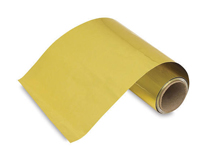
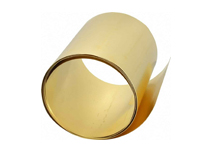
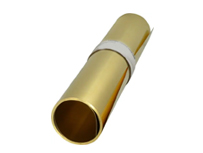
Weight & Sizing Reference
For freight and material estimation, weight per square metre by thickness (2000×1000mm sheet):
Thickness (mm) | Weight (kg/m²) | Weight per Unit (kg) |
|---|---|---|
0.18 | 2.88 | 1.44 |
0.24 | 3.84 | 1.92 |
0.32 | 5.12 | 2.56 |
0.50 | 8.00 | 4.00 |
0.75 | 12.00 | 6.00 |
1.00 | 16.00 | 8.00 |
1.50 | 24.00 | 12.00 |
2.00 | 32.00 | 16.00 |
3.00 | 48.00 | 24.00 |
Where Brass Shims Actually Get Used
Industry | Application |
|---|---|
Automotive & Aerospace | Precision alignment shims for engine components, transmission housings and airframe assemblies |
Chemical Industry | Gap-filling shims in pump and valve assemblies handling fuel oil, gasoline, kerosene and alcohol-based fluids |
Heat Exchangers | Thin brass foil shims used to set tube-sheet clearances and correct alignment in heat exchanger bundles |
Food Processing | Corrosion-resistant spacing shims for food-grade machinery where hygiene and non-reactive surfaces are required |
Electrical & Electronics | Electrical panel shims and bus bar spacers leveraging 28% IACS conductivity — roughly 14x higher than SS 304 |
Architectural Trim | Decorative and structural shims for cladding, trim and facade systems where appearance and corrosion resistance matter |
Marine Applications | Corrosion-resistant brass shims for seawater service pipework, flanges and deck fittings |
Heavy Engineering | Alignment shims for large machinery bases, compressors, turbines and industrial pump sets |
Brass shims are also widely used as Alignment Shims in precision machinery leveling and base-plate setting, and for jobs that need a metal spacer in a batch of odd or one-off sizes rather than production runs, our Precut Shims service covers that without a painful minimum order.
Quality Assurance & Documentation
Every batch of brass shims we supply carries the documentation to back up what’s actually in the box, not a generic certificate issued after the fact.
Document / Test | Details |
|---|---|
Mill Test Certificate | Chemical composition and mechanical property report per heat |
EN 10204 / 3.1B | Material test report with mill certification |
Third Party Inspection | Available on request from approved agencies |
Raw Materials Certificate | Origin and composition of input copper-zinc alloy |
100% Radiography Test | For critical structural applications on request |
What Drives the Price
| Factor | Effect on Price |
|---|---|
| Grade | C21000 (gilding metal) costs more than C27200 (yellow brass) due to higher copper content |
| Thickness | Foil-thin stock (below 0.1mm) costs more per unit — harder to hold flat and consistent |
| Temper | Spring hard and half hard cost more than standard annealed condition |
| Order Quantity | Bulk sheet or coil orders reduce the per-unit price meaningfully |
| Custom Sizing | Custom-cut sizes and shapes cost more than stock rectangles |
FAQ’s About Brass Shim
Brass shims are thin, precisely cut pieces of metal designed to fill spaces, correct alignment, or hold parts in place in mechanical assemblies. Typical applications include machinery alignment, electrical panel clearance, pump and valve clearance, architectural trim, and heat exchanger assembly.
ASTM B36 / ASME SB36 is the primary standard for brass plate, sheet, strip and rolled bar, covering the full C21000–C27200 grade range we stock.
C26000, cartridge brass — 70% copper, 30% zinc — is the most widely used shim grade across nearly all industries, thanks to its balance of formability, corrosion resistance, and cost.
We cut to size using precision slitting and shearing equipment, working from coil or sheet stock to the exact width, length and shape specified — custom shapes cut from a drawing or sample are handled the same way.
The key differentiator is electrical conductivity — brass runs at roughly 28% IACS versus stainless’s 2%, about 14 times higher. Stainless wins on corrosion resistance in aggressive or high-temperature environments; brass wins on conductivity, machinability, and cost for general and electrical use.
From 0.05mm foil up to 3.0mm sheet as standard stock, with thicker plate available on request. Thinner precision foil costs more per unit due to tighter tolerances.
No — copper-zinc alloys including brass are prone to stress corrosion cracking in ammonia or ammonium-salt environments. Stainless steel or copper-nickel shims are the better choice for that specific service condition.
Other Available Stock of Brass Shims
- Brass Hard Shims
- Brass Ready Cut Shims
- Brass C23000 Shims
- Brass Shim Coil Wholesaler
- Brass Shim Kit
- Hot Rolled Brass Shims
- Brass Shim Rings Supplier
- Brass Round Shims in Mumbai
- Brass Cladding Shims Exporter
- Brass Mirror Polish Shims
- Brass Shims Stock
- Cold Rolled Brass Shims
- Hard Brass Shims
- Brass CR Shims Stockist
- Brass C27200 Shim Dealer
- Custom Brass Shims
- Brass C21000 Shims
- Brass UNS C26800 Shims
- Brass Shim Strips Stockist
- Brass Shims Suppliers
- Brass C260 / C26000 Shim
- Brass HR Shims Manufacturer
- Brass Shims Manufacturers in India
- Brass Polished Shim Distributors
- Brass C330 / C33000 Shims
- Thin Brass Shims
- Brass Cut Shims in India
- Brass Shim Material