
Titanium ball valves outlast stainless steel in seawater, oxidising acids, and chloride environments where 316L corrodes within months. Kalpataru Piping Solution manufactures titanium ball valves in Grades 2, 5, 7, and 12 for offshore, chemical, pharmaceutical, and marine applications — with NACE MR0175, API 6D, and ASME B16.34 compliance.
As one of India’s premier titanium ball valve manufacturers, we engineer valves that combine exceptional corrosion resistance, outstanding strength-to-weight ratio, and absolute leak-free reliability across the most demanding applications on the planet. Our titanium ball valves are manufactured to ASTM B367, ASTM B381, and ASME B16.34 standards, covering Grades 2, 5, 7, and 12 to match the precise metallurgical and pressure requirements of your system.
From offshore oil platforms to pharmaceutical clean rooms, from seawater desalination plants to aerospace hydraulic lines, a Kalpataru titanium ball valve delivers zero compromise. Available in sizes from ¼” to 24″ with full bore and reduced bore configurations, in 2-way, 3-way, and multi-port designs, our valves are fire-safe certified (API 607 / API 6FA), pressure-tested to API 598 & ISO 5208, and supplied with full material traceability. Whether you need standard instrumentation ball valves or custom-engineered high-pressure titanium valves, our team is ready to deliver — anywhere in the world.
What Is a Titanium Ball Valve?
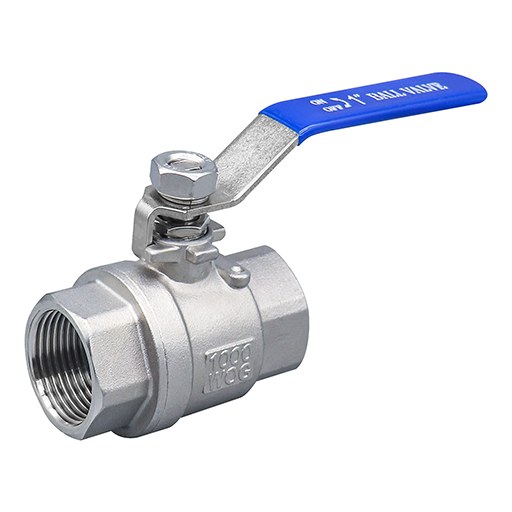
A titanium ball valve is a quarter-turn rotary valve that uses a drilled, hollow titanium ball as the flow control element. When the ball’s bore aligns with the pipe, flow passes freely; a 90° rotation seals it completely. What makes titanium the material of choice in aggressive environments is its extraordinary combination of properties: it is as strong as structural steel yet roughly 45% lighter, and it resists attack from chlorides, seawater, oxidising acids, and most industrial chemicals that destroy stainless steel.
As dedicated titanium ball valve manufacturers, Kalpataru Piping Solution supplies both forged and cast configurations. Forged titanium valves — machined from wrought barstock per ASTM B381 — deliver zero porosity, superior grain structure, and maximum pressure integrity for high-stakes, high-cycle applications. Cast titanium valves per ASTM B367 offer geometrical flexibility for complex multi-port bodies at competitive cost.
Our ball valves product range also includes stainless steel ball valves, Inconel ball valves, Duplex steel ball valves, Super Duplex ball valves, Monel ball valves, and more — all manufactured with the same commitment to quality and traceability.
Titanium Grades & Material Specifications
Not all titanium is the same. Kalpataru Piping Solution, as experienced titanium ball valve manufacturers, sources and processes commercially pure and alloyed titanium grades to precisely match your process media, pressure class, and temperature range. Below is a definitive guide to the grades we supply.
Technical Data
Material Standard Cross-Reference
| Product Form | ASTM Standard | Applies To |
| Forged Valve Bodies | ASTM B381 | Titanium forgings for valve bodies |
| Castings | ASTM B367 Grade C2 | Cast titanium valve bodies |
| Bar Stock (stems, balls) | ASTM B348 | Titanium bar and billet |
| Plate / Sheet | ASTM B265 | Seat rings, disc materials |
| Seamless Tube | ASTM B338 | End connections, integral tube ends |
For related titanium piping components, see our Titanium Grade 2 Instrumentation Ball Valves and Titanium Grade 5 Instrumentation Ball Valves pages. We also supply Titanium Tubes and titanium tube fittings.
Titanium Ball Valve Technical Specifications
Every titanium ball valve from Kalpataru Piping Solution is manufactured to precise dimensional and pressure standards. The table below covers our standard supply range; custom sizes and pressure classes are available on request.
| Parameter | Specification |
| Valve Type | Titanium Ball Valve (2-way, 3-way, 4-way) |
| Size Range | ¼” to 24″ (DN 6 to DN 600) |
| Bore Type | Full Bore (FB) & Reduced Bore (RB) |
| Pressure Class | 150#, 300#, 600#, 900#, 1500#, 2500# (ASME); PN 10–PN 420 |
| Body Configuration | 1-Piece, 2-Piece, 3-Piece, Split-Body |
| End Connections | Flanged (ASME B16.5), Threaded (NPT/BSP), Socket Weld, Butt Weld |
| Leakage Class | Class VI (zero-leakage soft seat); Metal-to-Metal (Class IV/V) |
| Seat / Seal Material | PTFE, RPTFE, PEEK, UHMWPE, PPL, Metal-to-Metal |
| Stem Design | Anti-blowout, live-loaded, self-adjusting packing |
| Operation | Manual (lever/gear), Pneumatic Actuator, Electric Actuator, Hydraulic |
| Mounting Flange | ISO 5211 (actuator-ready) |
| Max Operating Temperature | -196°C to 540°C (grade & seat dependent) |
| Max Working Pressure | Up to 6,000 PSI (414 bar) |
| Fire-Safe Certification | API 607 / API 6FA |
| Fugitive Emissions | ISO 15848-1 / API 622 |
Instrumentation Ball Valve Specifications
| Parameter | Specification |
| Size Range | ¼” to 2″ (DN 6 to DN 50) |
| Pressure Rating | 3,000 PSI / 6,000 PSI |
| Thread Standards | NPT, BSP, SAE, JIC |
| Connection Types | Single ferrule, Double ferrule, Threaded, Flanged |
| Applicable Grades | Ti Grade 2, Grade 5 |
| Flow Cv Range | 0.93 to 87 Cv |
| Brand Reference | OS-LOK equivalent; Swagelok-type pattern available |
Design & Manufacturing Standards
| Standard | Scope |
| API 6D | Design and manufacture of pipeline ball valves |
| ASME B16.34 | Pressure-temperature ratings |
| ISO 17292 | Metal ball valves for the petroleum industry |
| BS 5351 | Steel ball valves (adapted for titanium) |
| API 598 / ISO 5208 | Valve inspection and pressure testing |
| NACE MR0175 / ISO 15156 | Sour service (H₂S) environments |
| EN 10204 3.1 / 3.2 | Material test certificates |
Titanium Ball Valve Applications & Industries
The unmatched corrosion resistance and structural properties of titanium make our titanium ball valves the go-to choice across the world’s most demanding industries. Titanium has replaced heavier, less corrosion-resistant metals in a wide range of critical applications — delivering longer service life, lower maintenance cost, and safer operation.
Industry Applications
| Industry | Typical Application | Why Titanium? |
| Oil & Gas | Wellhead control, subsea valves, sour gas service, offshore manifolds | Excellent H₂S and chloride resistance; NACE MR0175 compliance |
| Chemical Processing | Acid handling (HNO₃, HCl, H₂SO₄), chlorine service, oxidising media | Superior resistance to oxidising acids; no chloride SCC |
| Desalination & Water Treatment | Seawater intake, RO concentrate, brine disposal | Unparalleled seawater resistance at all temperatures |
| Pharmaceutical & Biotech | Clean-in-place (CIP), sterile process lines, API manufacturing | Biocompatible, non-toxic, electropolishable surface |
| Power Generation | Cooling water circuits, condenser systems, heat exchangers | Resists biofouling and pitting in once-through seawater cooling |
| Aerospace & Defence | Hydraulic systems, fuel control, cryogenic lines | High strength-to-weight ratio; low weight saves payload |
| Marine & Shipbuilding | Ballast water treatment, seawater cooling, fire-main systems | Zero corrosion in continuous seawater immersion |
| Pulp & Paper | Bleach plant (ClO₂, Cl₂, hypochlorite service) | Resists bleaching chemicals that destroy 316L stainless steel |
| Food & Beverage | High-purity liquid handling, clean rooms | Inert, non-contaminating, FDA-acceptable material |
| Automotive & Motorsport | Exhaust, turbo, engine components (Grade 5) | 45% lighter than steel; withstands high exhaust temperatures |
Titanium Ball Valve vs. Other Alloys — Comparison
Selecting the right valve material is a critical engineering decision. The table below compares titanium against commonly specified alloys to help you determine when a titanium ball valve is the optimum — and most cost-effective — long-term choice.
| Property | Titanium Gr 2 | 316L SS | Duplex 2205 | Super Duplex 2507 | Hastelloy C-276 | Monel 400 |
| Density (g/cm³) | 4.51 | 8.00 | 7.82 | 7.80 | 8.89 | 8.80 |
| Tensile Strength (MPa) | 345–550 | 485–620 | 620–850 | 750–900 | 690–760 | 480–550 |
| Seawater Resistance | ★★★★★ | ★★☆☆☆ | ★★★★☆ | ★★★★☆ | ★★★★★ | ★★★★☆ |
| Chloride SCC Resistance | Immune | Susceptible | Resistant | Highly Resistant | Resistant | Resistant |
| Oxidising Acid Resistance | Superior | Good | Moderate | Moderate | Good | Poor |
| Reducing Acid Resistance | Limited (Gr 7 solves this) | Moderate | Moderate | Moderate | Superior | Good |
| Biocompatibility | Yes | Limited | No | No | No | No |
| Weight vs Baseline | 45% lighter | Baseline | Similar | Similar | 11% heavier | 10% heavier |
| Relative Cost | Higher upfront, lower lifecycle | Lowest upfront | Medium | Higher | Highest | Medium |
| Best Application | Seawater, oxidising acids, pharma | General duty | Offshore, chloride | Severe offshore | Highly reducing acids | Seawater, HF acid |
When to Choose Titanium Over Stainless Steel
- Chloride concentration exceeds 200 ppm (risk of 316L SCC)
- Operating temperature in seawater exceeds 60°C
- Weight reduction is critical (offshore topside, aerospace)
- Biocompatibility and product purity are required (pharma, food)
- Operating in oxidising acids (nitric, chromic) where SS is borderline
For Hastelloy valves, Inconel valves, Monel valves, and Stainless Steel valves, explore our complete alloy valve portfolio.
Explore our full range of specialty alloy valves:
- Ball Valves — all alloys
- Needle Valves — all alloys
- Manifold Valves — all alloys
- Check Valves — stainless, duplex, Inconel
- Steel Flanges — all grades
- Pipe Fittings — full alloy range
Types of Titanium Ball Valves
Kalpataru Piping Solution manufactures a comprehensive range of titanium ball valve types to serve every piping system configuration. Each type is available in Grade 2, Grade 5, and other titanium alloys.
- Titanium 2-Way Ball Valve (Standard)
The most common configuration — a single inlet and single outlet with a drilled spherical ball for on/off flow control. Available in 1-piece, 2-piece, and 3-piece body styles. The 3-piece design allows in-line maintenance without removing the valve from the pipeline, making it the preferred choice for process plants requiring frequent servicing.
- Titanium 3-Way Ball Valve
Featuring an L-port or T-port drilled ball, 3-way valves divert, mix, or split flow between two paths. The L-port alternates between two ports (diverting duty), while the T-port can connect all three simultaneously (mixing/splitting duty). Widely used in chemical dosing, heat exchanger bypass, and sampling systems.
- Titanium High-Pressure Ball Valve
Forged from ASTM B381 barstock and rated to 6,000 PSI (414 bar), these valves serve high-pressure instrumentation, hydraulic, and CNG/gas compression lines. Available in threaded (NPT/BSP) and double-ferrule compression connections in ¼” to 1″ sizes.
- Titanium Instrumentation Ball Valve
Compact, precision-machined valves for instrument isolation, sampling, and process measurement lines. Available in single-ferrule and double-ferrule configurations, rated to 3,000 or 6,000 PSI. Our Titanium Grade 2 Instrumentation Ball Valves and Grade 5 Instrumentation Ball Valves are direct alternatives to Swagelok® and Parker A-LOK® patterns.
- Titanium Trunnion Mounted Ball Valve
For large bore (6″ and above) and high-pressure applications, the ball is supported by upper and lower trunnion bearings, reducing operating torque and seat wear. Seat rings are spring-loaded to maintain sealing pressure independently of system pressure.
- Titanium Floating Ball Valve
The ball is not mechanically fixed — it ‘floats’ and is pushed against the downstream seat by line pressure to create a seal. This is the most economical design and is suitable for sizes up to 4″ and pressure classes up to Class 1500.
- Titanium Panel-Mount & Needle Ball Valve
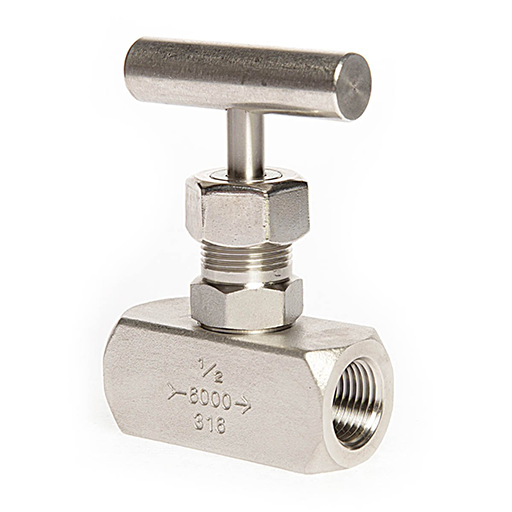
For panel-mounted instrumentation and laboratory applications, these compact valves integrate a ball valve body with panel-mount hardware. See also our Titanium Grade 2 Needle Valves and Grade 5 Needle Valves.
Related Products for Your System
For a complete titanium piping solution, Kalpataru also supplies:
- Titanium Grade 2 Tube Fittings and Grade 5 Tube Fittings
- Titanium Grade 2 Manifold Valves and Grade 5 Manifold Valves
- Hastelloy, Inconel, Monel and Duplex valves — see our full Valves range
Manufacturing Excellence & Quality Assurance
At Kalpataru Piping Solution, quality is not a department — it is built into every stage of how we manufacture titanium ball valves. Our process begins with material sourcing from certified mills with EN 10204 3.1 or 3.2 material test reports and ends only when every valve has passed a battery of rigorous tests.
Our Manufacturing Process
- Raw Material Procurement & PMI All titanium barstock and forgings arrive with certified mill test reports. Every heat is verified by Positive Material Identification (PMI) using X-ray fluorescence (XRF) spectrometry to confirm alloy grade before machining begins.
- Precision Machining (CAD/CAM & CNC) Valve bodies, balls, stems, and seats are machined on multi-axis CNC turning and milling centres using CAD/CAM-programmed toolpaths. Titanium’s chip management characteristics are addressed with optimised cutting speeds, heavy feed rates, sharp tooling, and flood coolant — consistent with Grade 2’s machining protocol.
- Surface Finishing & Passivation Machined components undergo controlled passivation in nitric acid solution, strengthening the natural TiO₂ protective oxide layer. For pharmaceutical and food-grade valves, electropolishing is available to achieve Ra ≤ 0.4 µm internal surfaces.
- Assembly & Lapping Ball and seat ring pairs are hand-lapped for precision fit. All sealing surfaces are inspected with optical profilometers. Assembly is conducted in a clean environment to prevent contamination.
- Non-Destructive Testing (NDT) Depending on service class and customer specification:
- Radiography (RT) — for casting soundness
- Ultrasonic Testing (UT) — for forging integrity
- Dye Penetrant Testing (PT) — for surface crack detection
- Magnetic Particle (MT) — where applicable
- Hydrostatic & Pneumatic Pressure Testing Every valve undergoes:
- Shell / body hydrostatic test at 1.5× rated pressure
- Seat leakage test at rated pressure (pneumatic low-pressure seat test also performed)
- All per API 598 and ISO 5208 acceptance criteria
- Dimensional & Visual Inspection Full dimensional check per ASME B16.34 and the applicable end connection standard. Visual inspection per MSS SP-55.
- Documentation & Traceability Every valve ships with: Material Test Certificates (MTC), hydrostatic test reports, NDT reports, dimensional inspection reports, and where required, Third Party Inspection (TPI) reports from agencies such as Bureau Veritas, SGS, TÜV, Lloyds, or DNV.
Certifications & Compliance Standards
Kalpataru Piping Solution’s titanium ball valves are manufactured, inspected, and certified to the most rigorous international standards. Our quality management system is ISO 9001 certified, and our products carry the approvals demanded by international EPC contractors, oil majors, and regulatory bodies.
Quality Management
- ISO 9001:2015 — Quality Management System certification
- EN 10204 3.1 / 3.2 — Material traceability and third-party certified mill test reports
- Government Recognised Export House (India)
Design & Pressure Standards
| Standard | Authority | Scope |
|---|---|---|
| API 6D | American Petroleum Institute | Pipeline ball valve design |
| ASME B16.34 | ASME | Pressure-temperature rating |
| ISO 17292 | ISO | Ball valves for petroleum industry |
| BS 5351 | BSI | Steel ball valves |
| ASME B16.5 | ASME | Pipe flanges and flanged fittings |
| ASME B16.11 | ASME | Forged fittings, threaded and socket welding |
Testing & Inspection
| Standard | Scope |
|---|---|
| API 598 | Valve inspection and pressure testing |
| ISO 5208 | Industrial valves — pressure testing |
| MSS SP-55 | Visual quality standards for castings |
| MSS SP-25 | Standard marking system for valves |
| MSS SP-110 | Ball valve flanged, threaded, and welding ends |
Environmental & Special Service
| Standard | Scope |
|---|---|
| API 607 / API 6FA | Fire-safe qualification testing |
| ISO 15848-1 | Fugitive emissions — industrial valves |
| API 622 | Fugitive emissions — packing for process valves |
| NACE MR0175 / ISO 15156 | Materials for sour service (H₂S environments) |
| EN 10204 3.2 | Third-party certified material test reports |
Third-Party Inspection Agencies Accepted
Bureau Veritas (BV) · SGS · TÜV Rheinland · Lloyd’s Register · DNV GL · Intertek · RINA
FAQs - Titanium Ball Valve
A titanium ball valve is a quarter-turn shut-off valve using a drilled spherical ball made from titanium alloy as the flow control element. Rotating the stem 90° aligns or blocks the ball bore with the pipe bore, providing fast, reliable open/close control. Titanium is chosen because it resists corrosion from seawater, acids, and chlorides that attack conventional stainless steel.
We supply titanium ball valves from ¼” (DN 6) up to 24″ (DN 600) in standard pressure classes. Instrumentation ball valves are available from ¼” to 2″ rated at 3,000 or 6,000 PSI. Custom sizes are available on request.
Forged titanium (ASTM B381) valves are machined from wrought barstock with a refined, directional grain structure — ideal for high-pressure, high-cycle duty where zero porosity is critical. Cast titanium (ASTM B367 Grade C2/C3) valves offer greater geometric flexibility for complex shapes at lower cost per unit and are suitable for standard pressure services.
Yes. Titanium is inherently resistant to hydrogen embrittlement and sulphide stress cracking (SSC). Kalpataru supplies titanium ball valves with full NACE MR0175 / ISO 15156 compliance documentation for sour gas and sour crude service.
We accept L/C, D/A, D/P, T/T, and PayPal. Standard delivery time is 4–8 weeks from order confirmation depending on size and material. For stocked standard sizes, expedited delivery may be possible. Valves are packed in export wooden boxes for safe international shipment.
In addition to titanium ball valves, we manufacture Titanium Grade 2 Needle Valves, Grade 5 Needle Valves, Titanium Manifold Valves, and titanium tube fittings. Explore our Valves page for the complete range.
Get a Quote — Titanium Ball Valves by Kalpataru Piping Solution
- Manufacturer-Direct Pricing — no middlemen, no inflated margins
- Full Traceability — every valve ships with MTC, test reports, and PMI records
- Fast Delivery — stocked sizes available; full lead time 4–8 weeks
- Expert Technical Support — our metallurgists help you select the right grade, seat, and body for your application
- Worldwide Export — we export to 50+ countries across the Middle East, Europe, North America, Southeast Asia, and Africa
- Third-Party Inspection — BV, SGS, TÜV, Lloyd's and other TPI agencies welcome
Have Any Questions ?
Please feel free to contact us. We will get back to you with 2 business days. Or just call us now.