
Config: Single Block-and-Bleed · Double Block-and-Bleed · Grades: Stainless · Duplex · Hastelloy · Nickel · Flanged take-off
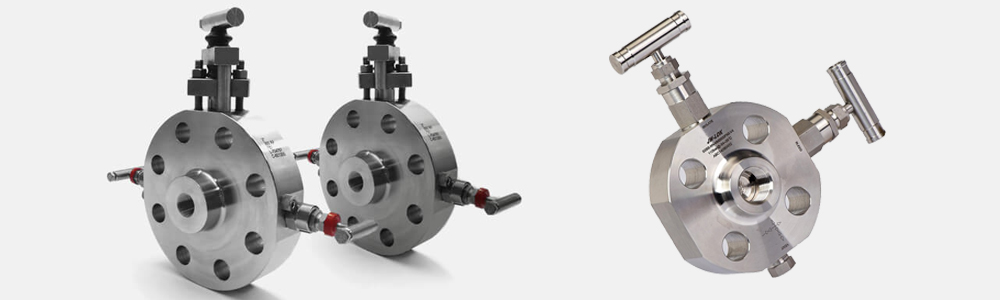
Kalpataru Piping Solution supplies monoflange valves, the compact block-and-bleed units that combine the isolation and bleed valves of an instrument take-off into a single body that bolts straight to the process flange. A monoflange valves replaces a stack of separate valves and a hook with one forged block, cutting weight, leak paths and installation time on a gauge or transmitter take-off. They are part of our full Valves range, in stainless, duplex, Hastelloy and nickel grades, and every valve is pressure tested before dispatch.
The configuration is single or double block-and-bleed: a single block-and-bleed gives one isolation valve plus a bleed, while a double gives two isolation valves in series plus a bleed between them, for the positive isolation critical instruments need. The monoflange bolts to the process on one side and connects to the instrument through instrumentation tube fittings on the other.
Single vs Double Block-and-Bleed
|
Configuration |
Valves |
Used for |
|
Single block-and-bleed |
One isolation valve + one bleed/vent |
General instrument take-offs where one isolation is enough |
|
Double block-and-bleed |
Two isolation valves in series + a bleed between |
Critical service needing positive, verifiable isolation |
The double block-and-bleed arrangement lets the space between the two isolation valves be bled and checked, so the operator can verify the instrument is truly isolated before removing it, which is why it is specified on high-pressure and hazardous service.
Monoflange Grades & Connections
Monoflanges are supplied in stainless 304 and 316, duplex and super duplex, Hastelloy and nickel grades, with the process side flanged to ANSI B16.5 ratings and the instrument side threaded or compression to suit the tubing. The grade follows the process chemistry, and the flange rating and facing match the take-off point. Being one forged body, the monoflange carries a single heat number and certificate rather than several.
Where Monoflanges Fit in the Hook-Up
A monoflange is the take-off point itself, bolting directly to the process flange in place of a separate isolation valve, nipple and hook. From its instrument side, instrumentation tube fittings run to the gauge or, for a differential-pressure transmitter, to a valve manifolds. Keeping the monoflange, fittings and manifold to one grade keeps the whole take-off a single material with one certificate trail, which is the main reason it is specified over a built-up valve stack.
Quality, Testing & Certification
Every monoflange is pressure tested and seat-leak checked before dispatch, with an EN 10204 mill test certificate for the body material, heat-number traceable. Positive material identification confirms the grade, NACE MR0175 for sour service and third-party witness through BV, SGS or TUV are arranged at order stage, and valves are cleaned and packed for instrument service. Common stainless monoflanges ship quickly; duplex, Hastelloy and nickel grades are confirmed on enquiry. Send the configuration, grade and flange rating and the quote comes back with the certification built in.
Monoflange Valves: Frequently Asked Questions
Single and double block-and-bleed monoflange valves in stainless 304 and 316, duplex and super duplex, Hastelloy and nickel grades, with flanged process connections to ANSI B16.5 and threaded or compression instrument connections. If a configuration or grade is not listed, ask, because we hold more than the site shows and can source to specification.
A monoflange is a compact valve that combines the isolation and bleed valves of an instrument take-off into one forged body that bolts straight to the process flange. It replaces a built-up stack of separate valves, nipples and a hook with a single block, which cuts weight, leak paths and installation time on gauge and transmitter take-offs.
The number of isolation valves. A single block-and-bleed has one isolation valve plus a bleed, which suits general take-offs. A double block-and-bleed has two isolation valves in series with a bleed between them, so the space between can be bled and checked to verify the instrument is truly isolated. Double is specified for critical, high-pressure and hazardous service.
Weight, leak paths and traceability. A monoflange replaces a stack of separate valves and fittings with one forged body, so there are fewer joints to leak, less weight hanging off the process connection, faster installation, and a single heat number and certificate instead of several. It is the compact, traceable way to build an instrument take-off.
Yes. Every monoflange is pressure tested and seat-leak checked before dispatch, and each order ships with an EN 10204 mill test certificate for the body material, heat-number traceable, with positive material identification, NACE documentation for sour service and third-party witness inspection available at order stage.