
What Are Titanium Valves?
Titanium valves are flow-control devices manufactured from commercially pure titanium or titanium alloys, most commonly Grade 2 and Grade 5 (Ti-6Al-4V). What makes titanium the material of choice for the world’s most demanding applications is a unique combination of properties that no stainless steel or even most nickel alloys can match: an exceptional strength-to-weight ratio that allows lightweight piping systems without sacrificing pressure capability, outstanding corrosion resistance in seawater, chlorinated media, and oxidizing acids due to a self-healing titanium dioxide oxide layer, and remarkable biocompatibility that makes it the preferred metal in pharmaceutical and food-grade systems. At Kalpataru Piping Solution, we manufacture a comprehensive range of titanium valves including ball, gate, globe, needle, check, manifold, monoflange, butterfly, and double block & bleed (DBB) configurations – all engineered to the latest ASME, API, and BS standards and backed by full EN 10204 Type 3.1 mill test certificates. Whether you need a single instrumentation valve or a complete titanium valve package for a desalination plant, we deliver on time and at a competitive titanium valve price.
Titanium Valve Material Grades
Titanium Valves vs Stainless Steel 316L
|
Property |
Titanium Grade 2 |
Titanium Grade 5 (Ti-6Al-4V) |
Stainless Steel 316L |
|
Density (g/cc) |
4.51 |
4.43 |
8.00 |
|
UTS (MPa) |
345 min |
895 min |
485 min |
|
Yield Strength (MPa) |
275 min |
828 min |
170 min |
|
Corrosion in Seawater |
Excellent (nil) |
Excellent (nil) |
Good (crevice risk) |
|
Corrosion in Chlorine/HCl |
Excellent |
Excellent |
Poor to Fair |
|
Corrosion in HNO3 |
Excellent |
Excellent |
Good |
|
Biocompatibility |
Excellent |
Excellent |
Fair |
|
Max Service Temp (deg C) |
315 (PTFE seat) |
450 (metal seat) |
400 |
|
Weight vs SS |
44% lighter |
45% lighter |
Baseline |
|
NACE MR0175 Compliance |
Yes (Grade 2) |
Yes (Grade 5 with limits) |
Grade dependent |
|
Typical Cost Premium vs SS |
Higher |
Higher |
Baseline |
|
Best For |
Desalination, marine, pharma |
Aerospace, high-strength, HP |
General industrial |
Titanium Valve Specifications
Understanding accurate titanium valve specifications is critical to selecting the right valve for your application. Below are the detailed technical parameters Kalpataru Piping Solution manufactures to.
|
Specification Parameter |
Details |
|
Material Standards |
ASTM B265 (Sheet/Plate/Strip), ASTM B381 (Forgings), ASTM B337/B338 (Tubes), AMS 4928 (Gr5 Bar) |
|
Design Standards |
ASME B16.34, BS 5351 (Ball Valves), API 600 (Gate Valves), API 594 (Check Valves), API 6D (Pipeline Valves) |
|
Face-to-Face Dimensions |
ASME B16.10, API 6D |
|
Flanges |
ASME B16.5 (up to 24″), ASME B16.47 (above 24″) |
|
Wall Thickness |
ASME B16.34 (Minimum body wall) |
|
Testing Standards |
API 598 (Shell 1.5x WP, Seat 1.1x WP), BS EN 12266-1, API 607/6FA (Fire-safe) |
|
Material Certificate |
EN 10204 Type 3.1 (Standard), Type 3.2 (on request) |
|
Traceability |
Full heat and lot number traceability |
|
NDT Options |
Dye Penetrant (PT), Radiography (RT), Ultrasonic (UT), PMI (XRF) |
|
Valve Body Materials |
Gr1 (UNS R50250), Gr2 (UNS R50400), Gr4 (UNS R50700), Gr5 (UNS R56400) |
|
Trim Materials |
Titanium, PTFE, PEEK, Grafoil, Stellite-faced |
|
Stem Packing |
PTFE V-rings (standard), Grafoil (high-temp), Live-loaded PTFE |
|
Actuator Mounting |
ISO 5211 standard pad (pneumatic, hydraulic, electric) |
|
Pressure Rating (Instr.) |
6,000 PSI standard; 10,000 PSI on request |
|
End Connections (Instr.) |
Compression (Swagelok/Parker compatible), NPT, BSP, BW, SW |
Pressure-Temperature Ratings (ASME B16.34, Titanium Grade 2, PSI)
|
Temperature (deg F) |
Class 150 |
Class 300 |
Class 400 |
Class 600 |
Class 900 |
Class 1500 |
Class 2500 |
|
-20 to 100 |
275 |
720 |
960 |
1,440 |
2,160 |
3,600 |
6,000 |
|
200 |
230 |
600 |
800 |
1,200 |
1,800 |
3,000 |
5,000 |
|
300 |
205 |
540 |
720 |
1,080 |
1,620 |
2,700 |
4,500 |
|
400 |
190 |
495 |
660 |
995 |
1,490 |
2,485 |
4,140 |
|
500 |
170 |
465 |
620 |
930 |
1,395 |
2,330 |
3,880 |
|
600 |
140 |
435 |
580 |
875 |
1,310 |
2,185 |
3,640 |
|
700 |
110 |
425 |
565 |
850 |
1,275 |
2,125 |
3,540 |
|
800 |
80 |
405 |
540 |
805 |
1,210 |
2,015 |
3,360 |
|
900 |
50 |
390 |
520 |
780 |
1,165 |
1,945 |
3,240 |
|
1,000 |
20 |
320 |
430 |
640 |
965 |
1,605 |
2,675 |
|
1,100 |
20* |
255 |
345 |
515 |
770 |
1,285 |
2,145 |
|
1,200 |
20* |
155 |
205 |
310 |
465 |
770 |
1,285 |
|
1,500 |
10* |
25 |
35 |
55 |
80 |
135 |
230 |
*Values marked with * are creep-governed; consult engineering for sustained service above 1,000 deg F.
Types of Titanium Valves
Kalpataru Piping Solution manufactures the complete family of titanium valves across all standard configurations. Each type is engineered to ASME, API, or BS specifications using verified Grade 2 or Grade 5 titanium forgings and bar stock.
1. Titanium Ball Valve
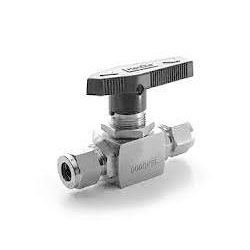
Titanium ball valves offer a quarter-turn, full-bore or reduced-bore shutoff in sizes from 1/4″ to 12″. Available in 2-piece and 3-piece body constructions with PTFE, PEEK, or metal seats. Our Titanium Grade 2 instrumentation ball valves handle up to 6,000 PSI and are widely used in chemical sampling, desalination, and subsea systems.Grade 5 (Ti-6Al-4V) ball valves are chosen when higher mechanical strength is required alongside corrosion resistance.
2. Titanium Gate Valve
Titanium gate valves provide full-bore, bi-directional shutoff for isolation service. Manufactured to API 600 (cast) and BS 1414/ASME B16.34 (forged), available in Classes 150 through 1500, NPS 2″ to 24″. The forged titanium gate valve is ideal for seawater lift systems, chlor-alkali plants, and pulp bleaching circuits where stainless steel suffers crevice corrosion or pitting.
3. Titanium Globe Valve
Titanium globe valves offer precise throttling control in corrosive service. Available in straight-pattern, angle-pattern, and Y-pattern configurations per ASME B16.34. Forged Grade 2 titanium body, PTFE or Grafoil stem packing, renewable PTFE or hard-faced seat rings. Commonly specified for chlorinated water dosing, pharmaceutical WFI systems, and titanium dioxide (TiO2) production lines.
4. Titanium Needle Valve
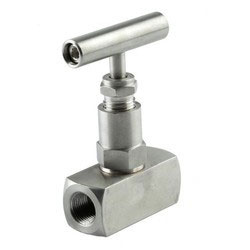
Titanium needle valves provide fine metering and positive shutoff for instrumentation and process sampling.Titanium Grade 2 needle valves are available from 1/8″ to 1″ in NPT, BSP, and compression-end connections at 6,000 PSI working pressure.Grade 5 needle valves are specified for high-pressure offshore and aerospace hydraulic systems up to 10,000 PSI.
5. Titanium Check Valve
Titanium check valves prevent backflow in corrosive pipelines. Our range includes swing-check, piston/lift-check, and dual-plate wafer check valves per API 594 and ASME B16.34. The check valve range covers NPS 1/2″ to 24″, Class 150 to 1500, and is especially favored in seawater reverse osmosis (SWRO) membrane protection service and chlorine gas lines.
6. Titanium Manifold Valve
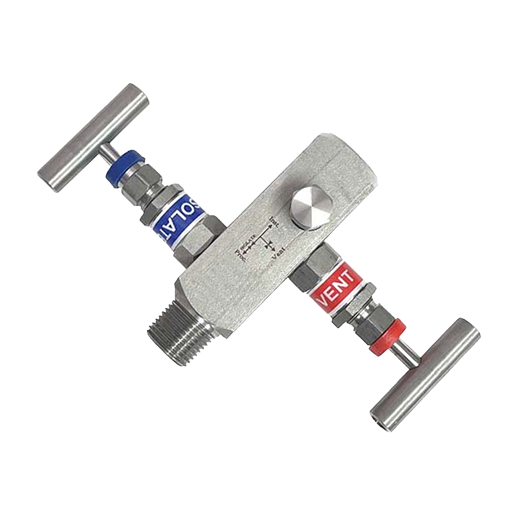
Titanium manifold valves – 2-valve, 3-valve, and 5-valve configurations – are the standard interface between pressure/differential pressure transmitters and process piping in corrosive service.Titanium Grade 2 manifold valves and Grade 5 manifold valves are built to DIN EN 61518 and are HART-compatible for digital process control.
7. Titanium Monoflange Valve
Titanium monoflange valves combine the function of an isolation valve and a conventional 2 or 3-valve manifold into a single, compact, leak-proof block. Ideal for offshore topsides, subsea, and chemical plant instrumentation tapping points where space and weight are critical. Available in ANSI Class 150 to 2500.
8. Titanium Butterfly Valve
Titanium concentric and double-offset butterfly valves are available in NPS 2″ to 48″ for large-diameter, low-pressure seawater and cooling water service. EPDM, PTFE, or NBR liner options; manual lever/gear, pneumatic, or electric actuated. Compliant with API 609 and EN 593.
9. Titanium Double Block & Bleed (DBB) Valve
Titanium DBB valves provide two independent sealing elements and a bleed port between them, satisfying the most stringent isolation requirements in one compact body. Preferred in offshore subsea trees, chemical injection systems, and sampling lines where a positive zero-leakage guarantee is mandatory.
Titanium Valve Size Range & Availability Matrix
Standard Size & Pressure Class Availability
|
Valve Type |
Size Range (NPS) |
Pressure Classes |
Body Material |
|
Ball Valve (Instrumentation) |
1/8″ to 1″ |
6,000 / 10,000 PSI |
Grade 2, Grade 5 |
|
Ball Valve (Pipeline) |
1/2″ to 12″ |
Class 150, 300, 600, 900, 1500 |
Grade 2, Grade 5 |
|
Gate Valve |
1/2″ to 24″ |
Class 150, 300, 600, 900, 1500 |
Grade 2 |
|
Globe Valve |
1/2″ to 12″ |
Class 150, 300, 600, 900 |
Grade 2, Grade 5 |
|
Needle Valve (Instr.) |
1/8″ to 1″ |
6,000 / 10,000 PSI |
Grade 2, Grade 4, Grade 5 |
|
Check Valve |
1/2″ to 24″ |
Class 150, 300, 600, 1500 |
Grade 2 |
|
Manifold Valve (2V/3V/5V) |
1/4″ to 1″ |
Up to 6,000 PSI |
Grade 2, Grade 5 |
|
Monoflange Valve |
1/2″ to 2″ |
Class 150 to 2500 |
Grade 2, Grade 5 |
|
Butterfly Valve |
2″ to 48″ |
Class 150, 300 |
Grade 2 |
|
DBB Valve |
1/2″ to 4″ |
Class 600 to 2500 |
Grade 2, Grade 5 |
End Connection Options
|
Connection Type |
Standard |
Typical Valve Types |
|
Raised Face Flange (RF) |
ASME B16.5 / ASME B16.47 |
Ball, Gate, Globe, Check, Butterfly |
|
Ring Joint Flange (RTJ) |
ASME B16.20 |
Ball, Gate, Globe (high-pressure) |
|
Butt Weld (BW) |
ASME B16.25 |
Gate, Globe, Check |
|
Socket Weld (SW) |
ASME B16.11 |
Ball, Globe, Check (small bore) |
|
Screwed NPT |
ASME B1.20.1 |
Ball, Globe, Needle (small bore) |
|
Screwed BSP |
BS 21 / ISO 7/1 |
Ball, Globe, Needle (small bore) |
|
Compression Tube |
Swagelok / Parker compatible |
Needle, Ball (instrumentation) |
|
Female x Female |
– |
Needle, Ball (instrumentation block) |
|
Male x Female |
– |
Needle (metering) |
Instrumentation Needle Valve Dimension Standards (Port Size vs Cv)
|
Port Size (BSP) |
Media Pressure (max) |
Media Temperature |
Cv |
|
1/8″ |
0 to 408 Bar |
-20 deg C to 230 deg C |
– |
|
1/4″ |
0 to 408 Bar |
-20 deg C to 230 deg C |
0.4 |
|
3/8″ |
0 to 408 Bar |
-20 deg C to 230 deg C |
0.4 |
|
1/2″ |
0 to 408 Bar |
-20 deg C to 230 deg C |
0.6 |
|
3/4″ |
0 to 408 Bar |
-20 deg C to 230 deg C |
1.6 |
|
1″ |
0 to 408 Bar |
-20 deg C to 230 deg C |
2.5 |
Titanium Valve Chemical Composition
Kalpataru Piping Solution manufactures titanium valves from four principal grades. Each grade is sourced from verified mills with full ASTM/AMS certification, and we conduct incoming PMI (XRF) testing on every heat.
Chemical Composition Table (% Weight Max unless stated)
|
Element |
Grade 1 (R50250) |
Grade 2 (R50400) |
Grade 4 (R50700) |
Grade 5 Ti-6Al-4V (R56400) |
|
Titanium (Ti) |
Balance |
Balance |
Balance |
Balance |
|
Nitrogen (N) |
0.03 max |
0.03 max |
0.05 max |
0.05 max |
|
Carbon (C) |
0.08 max |
0.08 max |
0.08 max |
0.08 max |
|
Hydrogen (H) |
0.015 max |
0.015 max |
0.015 max |
0.015 max |
|
Iron (Fe) |
0.20 max |
0.30 max |
0.50 max |
0.40 max |
|
Oxygen (O) |
0.18 max |
0.25 max |
0.40 max |
0.20 max |
|
Aluminum (Al) |
– |
– |
– |
5.50 – 6.75 |
|
Vanadium (V) |
– |
– |
– |
3.50 – 4.50 |
|
Other elements each |
0.10 max |
0.10 max |
0.10 max |
0.10 max |
|
Other elements total |
0.40 max |
0.40 max |
0.40 max |
0.40 max |
|
UNS Number |
R50250 |
R50400 |
R50700 |
R56400 |
|
ASTM Forgings Standard |
B381 Gr F-1 |
B381 Gr F-2 |
B381 Gr F-4 |
B381 Gr F-5 |
|
ASTM Sheet/Plate Standard |
B265 Gr 1 |
B265 Gr 2 |
B265 Gr 4 |
B265 Gr 5 |
Grade Selection Guide for Titanium Valves
|
Grade |
Best Application |
Key Advantage |
Avoid When |
|
Grade 1 |
Ultra-pure chemical, pharma, food processing |
Highest formability, lowest oxygen |
High-strength/high-pressure service needed |
|
Grade 2 |
Desalination, seawater, chlor-alkali, marine, general corrosive service |
Best balance of strength, corrosion resistance, and fabricability |
Reducing acids without inhibitor |
|
Grade 4 |
Higher-strength general corrosive service, heat exchangers |
Higher yield than Gr2, still excellent corrosion resistance |
Where weight saving is critical (heavier than Gr2) |
|
Grade 5 (Ti-6Al-4V) |
Aerospace, offshore HP systems, high-strength instrumentation, subsea |
Highest strength (UTS 895 MPa), good corrosion resistance |
Prolonged HF acid or very reducing environments |
|
Grade 7 |
Reducing acid environments (HCl, H2SO4 dilute) |
Palladium addition for reducing acid resistance |
Where cost is primary driver |
Mechanical Properties of Titanium Valve Materials
The mechanical performance of titanium grades directly determines the pressure-temperature capability and ASME B16.34 ratings of the finished valve. All values below apply to ASTM B381 forgings as used in Kalpataru’s valve bodies.
Mechanical Properties Table (ASTM B381 Forgings – Minimum Values)
|
Property |
Grade 1 (F-1) |
Grade 2 (F-2) |
Grade 4 (F-4) |
Grade 5 (F-5) Ti-6Al-4V |
|
Ultimate Tensile Strength (MPa) |
240 |
345 |
550 |
895 |
|
Yield Strength 0.2% Offset (MPa) |
170 |
275 |
483 |
828 |
|
Elongation in 2″ (%) |
24 |
20 |
15 |
10 |
|
Reduction of Area (%) |
30 |
30 |
25 |
25 |
|
Brinell Hardness (HB max) |
120 |
160 |
225 |
334 |
|
Charpy Impact at -20 deg C (J) |
27 |
27 |
20 |
14 |
|
Density (g/cc) |
4.51 |
4.51 |
4.51 |
4.43 |
|
Modulus of Elasticity (GPa) |
103 |
103 |
103 |
114 |
|
Thermal Conductivity (W/m.K) |
17 |
17 |
17 |
6.7 |
|
Max Continuous Service Temp (deg C) |
250 |
315 |
315 |
450 |
Corrosion Resistance Data for Titanium Valves
Titanium owes its extraordinary corrosion performance to a thin, tenacious, self-repairing titanium dioxide (TiO2) oxide film that forms spontaneously in the presence of even trace amounts of oxygen or moisture. Unlike passive films on stainless steel, this oxide is stable across an exceptionally wide pH range and is resistant to most oxidizing and mildly reducing environments.
|
Corrosive Environment |
Grade 2 Resistance |
Grade 5 Resistance |
Notes |
|
Seawater (full temperature range) |
Excellent |
Excellent |
No crevice corrosion; immune to biofouling |
|
Chloride solutions (up to saturation) |
Excellent |
Excellent |
Immune to pitting and SCC vs SS316 |
|
Hypochlorite / Chlorine gas (wet) |
Excellent |
Excellent |
Primary reason for use in pulp bleach plants |
|
Nitric acid (HNO3, up to 65%) |
Excellent |
Excellent |
Superior to most stainless grades |
|
Sulfuric acid (H2SO4, dilute <5%) |
Fair |
Fair |
Grade 7 or 12 preferred for sustained reducing acid |
|
Hydrochloric acid (HCl, dilute <10%) |
Fair to Good |
Fair |
Inhibited HCl acceptable; Grade 7 preferred |
|
Phosphoric acid (H3PO4, <30%) |
Good |
Good |
Widely used in fertilizer and food industry |
|
Hydrofluoric acid (HF) |
Poor |
Poor |
Titanium is NOT resistant to HF of any concentration |
|
Sodium hydroxide (NaOH, <50%) |
Excellent |
Excellent |
Up to 80 deg C; above this, consult engineering |
|
Hydrogen peroxide (H2O2) |
Excellent |
Excellent |
Common in pharma and electronics |
|
Wet chlorine gas |
Excellent |
Excellent |
Cl2 + moisture; remain below 120 deg C for dry Cl2 |
|
Organic acids (acetic, citric) |
Excellent |
Excellent |
Ideal for food, pharma, and beverage |
|
Marine atmosphere |
Excellent |
Excellent |
Zero corrosion rate measured after 16 years |
Important: Titanium is NOT resistant to dry chlorine gas above 120 deg C or to concentrated reducing acids without inhibitors. Always consult Kalpataru’s engineering team when the service involves HF, reducing acids, or anhydrous conditions.
Titanium Valve Applications by Industry
Titanium’s unique combination of low density, exceptional corrosion resistance, and high strength makes it the preferred valve material across seven critical industries. Kalpataru Piping Solution’s titanium valves are actively deployed in the following sectors.
Desalination & Water Treatment
Seawater reverse osmosis (SWRO) plants demand materials that can withstand continuous exposure to chlorinated seawater at pressures up to 80 bar and temperatures up to 45 deg C. Titanium Grade 2 is the global industry standard material for SWRO high-pressure valve bodies, pump casings, and heat exchangers. Kalpataru’s titanium ball valves and titanium manifold valves are directly applied in membrane protection circuits, brine disposal lines, and energy recovery interconnects.
Chemical & Petrochemical Processing
Chlorine production (chlor-alkali), titanium dioxide manufacturing, sulfuric acid dilution, and nitric acid service are all environments where even Hastelloy C276 faces limitations. Titanium excels in oxidizing acid environments and wet chlorine service where stainless steel fails rapidly. Our titanium needle valves and titanium tube fittings are specified by EPC contractors for TiO2 pigment reactors, chlor-alkali electrolyzer headers, and HNO3 concentrators.
Marine & Offshore
Titanium’s complete immunity to crevice corrosion, pitting, and biofouling in seawater makes it the material of choice for offshore platform sea-water injection systems, subsea flow control modules, fire suppression systems, and ballast water treatment units. Kalpataru supplies titanium valves compliant with DNV-GL, Lloyd’s Register, and Bureau Veritas requirements for floating production vessels (FPSO), jack-up rigs, and fixed offshore platforms.
Aerospace & Defense
Titanium Grade 5 (Ti-6Al-4V) delivers aircraft-level strength at less than half the weight of steel, making it indispensable in hydraulic system valves, fuel shut-off valves, and oxygen manifolds in military and commercial aircraft. Kalpataru manufactures Grade 5 titanium needle valves and ball valves to AMS 4928 and MIL-T-9046 material specifications for defense procurement.
Pharmaceutical & Biotech
Titanium’s biocompatibility (ISO 10993 certified), resistance to strong sanitizing agents (H2O2, peracetic acid, NaOH CIP cycles), and non-metallic ion leaching make it preferred for WFI (Water for Injection), CIP/SIP piping, and bioreactor feed lines. Kalpataru’s titanium check valves and globe valves are supplied with electropolished internals (Ra < 0.4 micron) meeting ASME BPE and EHEDG standards.
Power Generation
Titanium condenser tube-sheets and water-box valves in coastal power plants handling seawater or brackish cooling water benefit from titanium’s corrosion immunity. Thermal and nuclear power plants specify titanium gate valves and check valves for circulating water systems, reducing maintenance shutdowns and costly replacements that plague stainless or cupro-nickel alternatives.
Pulp, Paper & Chlorate Manufacturing
The pulp bleaching process uses highly corrosive chlorine dioxide (ClO2) and sodium hypochlorite solutions that attack virtually every common engineering material except titanium. Kalpataru’s titanium manifold valves,ball valves, and tube fittings are the standard choice for bleaching stage instrumentation taps, chemical injection headers, and washer filtrate measurement loops.
Quality Standards & Testing for Titanium Valves
Every titanium valve leaving the Kalpataru Piping Solution manufacturing facility is built and tested to international standards. Our quality system is structured to meet the requirements of the most stringent global buyers, from European PED-regulated projects to NACE-mandated sour service lines.
Design & Material Standards
|
Standard |
Scope |
|
ASME B16.34 |
Valves – Flanged, Threaded, and Welding End (primary valve design standard) |
|
ASTM B381 |
Standard specification for titanium and titanium alloy forgings (valve bodies/bonnets) |
|
ASTM B265 |
Titanium and titanium alloy strip, sheet, and plate (trim components) |
|
ASTM B337 / B338 |
Titanium and titanium alloy seamless and welded tubes |
|
AMS 4928 |
Titanium alloy (Ti-6Al-4V) bars for aerospace Grade 5 valve bodies |
|
API 600 |
Bolted-bonnet steel gate valves for petroleum and natural gas |
|
API 6D |
Specification for pipeline and piping valves |
|
BS 5351 |
Steel ball valves for petroleum and related industries |
|
ASME B16.10 |
Face-to-face and end-to-end dimensions of valves |
|
ASME B16.5 |
Pipe flanges and flanged fittings NPS 1/2 through NPS 24 |
Testing Standards
|
Test |
Standard |
Requirement |
|
Shell (body) hydrostatic pressure test |
API 598 / BS EN 12266-1 |
1.5 x rated WP for minimum 60 seconds |
|
Seat leak test (low pressure) |
API 598 |
Air or nitrogen at 0.6 MPa (80 PSI) |
|
Seat leak test (high pressure) |
API 598 / BS EN 12266-1 |
1.1 x rated WP water |
|
Fire-safe test |
API 607 / API 6FA |
Post-fire body and seat leakage limits |
|
Backseat (stem packing) test |
API 598 |
Stem seal pressure integrity |
|
Positive Material Identification |
ASTM E1476 (XRF) |
100% of titanium components |
|
Dye Penetrant Test |
ASME Sec V / ASME Sec VIII |
Surface integrity on welds and castings |
|
Hardness test |
ASTM E18 |
Per NACE MR0175 HRC limits where applicable |
Certifications & Compliance
- EN 10204 Type 3.1 – Mill test certificate issued by manufacturer, endorsed by inspector
- EN 10204 Type 3.2 – Third-party witnessed MTC (on request)
- NACE MR0175 / ISO 15156 – Sour service compliance for Grade 2 and Grade 5 (HRC limits)
- PED 2014/68/EU – European Pressure Equipment Directive compliance for CE-marked valves
- RoHS / REACH – Hazardous substance declarations available
- ISO 9001:2015 – Quality management system certification
8-Stage Inspection Protocol
- Raw Material Inspection – PMI (XRF) on every heat; dimensional check of forgings/bar against ASTM B381/B265
- Machining Dimensional Inspection – All critical dimensions verified on CMM against ASME B16.34 tolerances
- Visual Inspection – Surface finish, weld quality (if applicable), thread form per ASME B1.20.1
- Non-Destructive Testing – Dye Penetrant (PT) on pressure boundary welds; RT/UT on request
- Hydrostatic Shell Test – API 598 at 1.5x rated working pressure
- Seat Leak Test – Low-pressure air test + high-pressure water test per API 598
- Functional Test – Full operational cycle, torque measurement, actuator response check
- Final Documentation Review – MTCs, test reports, dimensional records, packing list; all tied to unique heat number and order reference
Why Choose Kalpataru Piping Solution for Titanium Valves?
With hundreds of titanium valve manufacturers offering standard catalogue items, what separates Kalpataru Piping Solution is our engineering-led approach: we do not simply machine a valve from titanium stock – we engineer the right titanium grade, configuration, seat material, and surface treatment for your specific process conditions. Here is why procurement engineers and EPC contractors across 30+ countries continue to trust us.
Full Titanium Grade Portfolio with Interlinked Products
We stock and manufacture across the complete titanium grade range:
- Titanium Grade 2 Instrumentation Ball Valves – the industry workhorse for desalination and marine
- Titanium Grade 5 Instrumentation Ball Valves – high-strength option for aerospace and HP offshore
- Titanium Grade 2 Needle Valves – precision metering for chemical sampling
- Titanium Grade 5 Needle Valves – 10,000 PSI high-pressure instrumentation
- Titanium Grade 2 Manifold Valves – 2V, 3V, 5V for transmitter hook-ups
- Titanium Grade 5 Manifold Valves – heavy-duty manifold for high-pressure service
- Titanium Tube Fittings – complementary compression fittings for complete instrument loops
- Titanium Tubes – matched tubing for full-system supply
Specialised Titanium Machining Expertise
Titanium is notoriously difficult to machine – it work-hardens rapidly, generates extreme cutting heat, and requires dedicated tooling and coolant strategies. Our CNC machining cell operates with grade-dedicated tooling programs, flood coolant systems, and strict inter-operation cleaning protocols to prevent cross-contamination that could introduce iron contamination and compromise corrosion performance. All machined titanium components undergo post-machining passivation and, where required, electropolishing.
Competitive Titanium Valve Price with No Minimum Order
We understand that titanium valve price is a key procurement consideration. Our direct mill sourcing relationships in Japan, USA, and India, combined with in-house forging and machining, allow us to offer competitive pricing whether you need 1 valve or 1,000. Request a detailed quote with full MTC traceability through our contact page and receive a response within 24 hours.
Export to 30+ Countries with Full Documentation
Kalpataru Piping Solution exports titanium valves to the USA, UK, UAE, Saudi Arabia, Oman, Kuwait, Qatar, Bahrain, Germany, Netherlands, Italy, France, Australia, South Korea, Singapore, Malaysia, Thailand, Indonesia, South Africa, Nigeria, and 15 more countries. Every export shipment is accompanied by commercial invoice, packing list, country of origin certificate, full ASTM/EN 10204 MTCs, test reports, and NAVIS/NACE compliance declarations as required.
Short Lead Times & Expedite Options
Standard instrumentation titanium valves: 2-4 weeks from confirmed order. Large-bore pipeline valves or special alloy grades: 6-10 weeks. Expedited manufacturing available for shutdown and emergency replacement orders.
Titanium Valves Related Products
Explore our full range of titanium and specialty alloy products available for immediate inquiry:
|
Product |
Material / Grade |
Link |
|
Titanium Instrumentation Ball Valves |
Grade 2 |
|
|
Titanium Instrumentation Ball Valves |
Grade 5 (Ti-6Al-4V) |
|
|
Titanium Needle Valves |
Grade 2 |
|
|
Titanium Needle Valves |
Grade 5 |
|
|
Titanium Manifold Valves |
Grade 2 |
|
|
Titanium Manifold Valves |
Grade 5 |
|
|
Titanium Tube Fittings |
Grade 2 / Grade 5 |
|
|
Titanium Seamless & Welded Tubes |
Grade 2 / Grade 5 |
|
|
Titanium Tubes (Gr.2) |
ASTM B338 / B337 |
|
|
Titanium Tubes (Gr.5) |
ASTM B338 / B337 |
|
|
Monoflange Valves |
Titanium / Duplex / SS |
|
|
All Ball Valves |
Multi-material range |
|
|
All Gate Valves |
Multi-material range |
|
|
All Globe Valves |
Multi-material range |
|
|
All Needle Valves |
Multi-material range |
|
|
All Manifold Valves |
Multi-material range |
|
|
All Check Valves |
Multi-material range |
|
|
Full Product Catalogue |
All piping products |