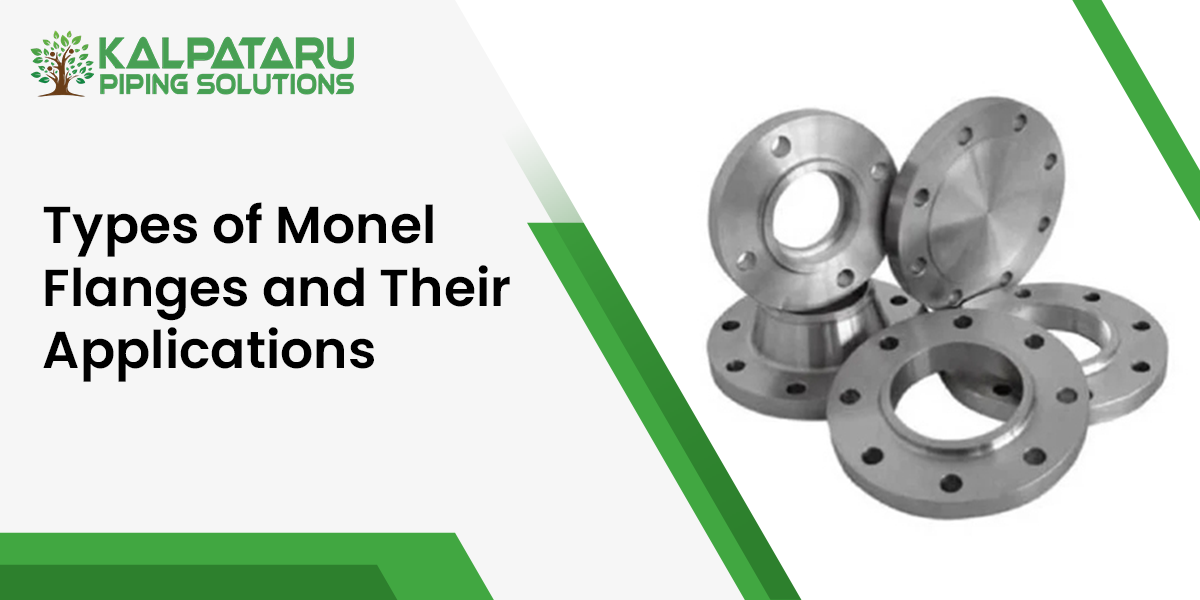
Monel Flanges are specialized piping materials that are nickel-copper alloys that have been known to have superior resistance to seawater, hydrofluoric acid, sulfuric acid and alkalies. High-performance industries such as marine engineering and chemical processing usually fail because of pitting or stress corrosion; Monel is required in these industries.
We discuss the various types of Monel flanges, the very important differences between Monel 400 and K-500, and the ASME standards that govern the pressure ratings of Monel flanges.
What Are Monel Flanges?
Monel Flanges are piping products composed of cold-worked high-performance nickel-copper alloy that is a solid-solution alloy. The unique feature of these flanges is the high resistance to corrosion under a very rapid flowing seawater and other acids. They remain ductile and tough between cryogenic temperatures up to 480 o C. Monel 400, which provides the standard of high strength piping, and Monel K-500, an age-hardenable alloy, which includes added aluminum and titanium to provide much higher hardness, yet has the same corrosion resistance as Grade 400, dominate the market.
Types of Monel Flanges & Use Cases
Selecting the right flange type is critical for maintaining a leak-proof seal under pressure.
- Weld Neck (WN): Designed with a long tapered hub that is welded to the pipe. Best for: High-pressure, high-temperature, or cyclic loads in offshore platforms.
- Slip-On (SO): Slipped over the pipe and welded both inside and out. Best for: Lower pressure systems where alignment is a priority.
- Blind Flanges: Solid discs used to block off a section of pipe. Best for: High-pressure isolation and future system expansion.
- Socket Weld: Used for small-bore, high-pressure piping. Best for: Critical chemical lines where internal space is limited.
- Threaded Flanges: Attached without welding. Best for: Low-pressure systems or areas where welding is hazardous.
Flange Type Comparison Table
|
Flange Type |
Best Pressure Range |
Primary Advantage |
Typical Application |
|
Weld Neck |
Class 600 – 2500 |
High fatigue resistance |
Offshore Topsides |
|
Slip-On |
Class 150 – 300 |
Easy to align/Lower cost |
General Utility |
|
Blind |
Class 150 – 2500 |
Total isolation |
Vessel Openings |
|
Socket Weld |
Class 300 – 1500 |
No weld protrusion |
Small-bore chemical lines |
Monel Flange Technical Specification Table
|
Category |
Standard / Specification |
Details |
|
Material Specs |
ASTM B564 / ASME SB564 |
Standard for Nickel Alloy Forged Flanges |
|
Dimensions |
ASME B16.5 |
NPS 1/2″ to NPS 24″ (Class 150 – 2500) |
|
Large Diameter |
ASME B16.47 Series A & B |
NPS 26″ to NPS 60″ (Class 75 – 900) |
|
Pressure Ratings |
Class 150, 300, 400, 600, 900, 1500, 2500 |
Pressure ratings depend on temperature |
|
Face Types |
RF, FF, RTJ, TF, GF |
Raised Face, Flat Face, Ring Type Joint, etc. |
|
Custom Specs |
MSS SP-44 / API 6A |
Specific for high-pressure pipelines |
|
Certifications |
EN 10204 3.1 / 3.2 |
Full traceability and inspection reports |
Monel 400 vs. Monel K-500 Flanges
Choosing between these grades depends on your strength requirements.
- Choose Monel 400 when: You need a general-purpose, high-strength material for seawater piping or chemical tanks where age-hardening is not required.
- Choose Monel K-500 when: You require the corrosion resistance of 400 but need the mechanical strength for high-torque shafts, fasteners, or high-pressure oilfield components.
Applications of Monel Flanges
- Marine & Offshore: Used in seawater valves, pump shafts, and splash-zone piping due to resistance to bio-fouling and high-velocity water.
- Chemical Processing: Essential for handling hydrofluoric acid and alkaline solutions.
- Oil & Gas: Reliable performance in “sour” gas environments and subsea equipment.
- Power Generation: Used in heat exchangers and boiler feed-water heaters.
FAQs About Monel Flanges
They are primarily used in marine environments and chemical plants where high resistance to seawater, acids, and alkalies is required.
Monel 400 is the industry standard for general corrosion resistance. Monel K-500 is “better” only if your application requires higher yield strength through age-hardening.
Yes. Monel 400 is highly resistant to flowing seawater, making it a top choice for ship hulls, propellers, and marine piping.
Series A flanges are larger and heavier, while Series B flanges have more bolts and are more compact for tighter spaces.
Conclusion
Monel flanges are an indispensable asset for industries facing aggressive corrosive environments, particularly in marine and chemical processing sectors. Whether you utilize the standard durability of Monel 400 or the enhanced mechanical strength of age-hardened Monel K-500, these nickel-copper alloys ensure reliable performance against seawater, acids, and alkalis. At Kalpataru Piping Solution, we provide a comprehensive range of Monel flanges—including Weld Neck, Blind, and Slip-On types—manufactured to strict ASME B16.5 and ASTM B564 standards. By choosing our precision-engineered solutions, you guarantee your piping systems remain ductile and leak-proof under extreme pressure and thermal fluctuations. Trust Kalpataru Piping Solution to deliver the high-performance materials and technical expertise required to safeguard your most critical infrastructure against long-term degradation.
Enquire Now
Related Blogs
What is Stainless Steel Valve?
What Is Monel Alloy? Composition, Properties & Uses (Guide)