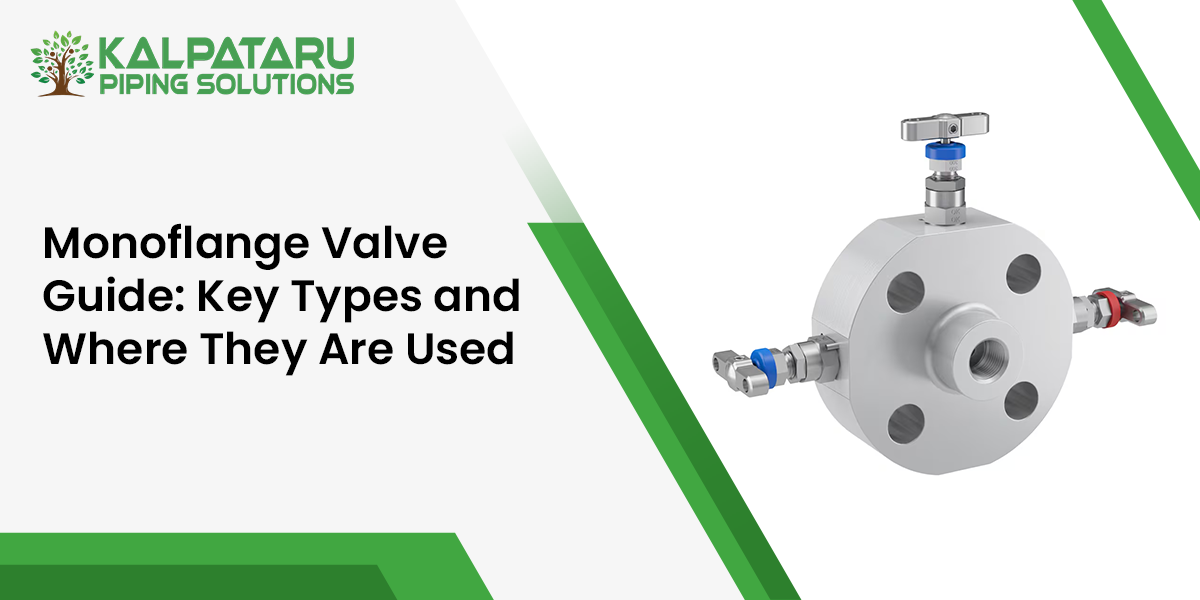
The high-pressure applications in modern industrial systems require compact, reliable and leak free flow control systems, particularly in the high pressure settings. MonoFlange has become one of the most favourable components in critical applications. A monoflange valve combines several valve functions together (isolation and venting, etc.), into one smaller body, greatly limiting the number of possible points of leakage, as well as the complexity of installation. The mono flange design reduces the number of fittings and connections, unlike the traditional multi-valve assemblies that need individual systems to be fitted.
The oil and gas, petrochemical processing, power generation, and offshore platforms industries have been embracing the solution of MonoFlange due to the desire to improve the safety and efficiency of their industries. A monoflange valve is designed to replace large traditional configurations, thereby saving on time used in maintenance, reducing the cost of installation and enhancing the reliability of operations of the industrial environment where it is installed.
What is Manoflanges Valve?
The MonoFlange is a small, one-piece component that combines several functions of flow control that include isolation and venting under one thing. A monoflange valve is a single small assembly that incorporates previously available parts of valve assemblies, fittings, and connectors into a compact package provided directly to the pipeline or equipment, unlike traditional manifold and block valve assemblies, which require separate valves, fittings, and connectors. Such an integrated mono flange structure will greatly minimize the connection points, thus reducing the possible leak paths and enhancing the overall system safety. Besides improved reliability, MonoFlange units have a compact design, which is perfect for high-pressure and tight space installations. The monoflange valve is suitable and economical in terms of installation time and cost since fewer components are needed than in traditional multi-valve installations, and so, it is an efficient and cost-effective solution to the present-day industrial systems.
Types of Monoflange Valves
The monoflange valves come in different types because different applications need different valves according to their needs. The list of different types of monoflanges valves is listed below.
1. Monoflange Ball Valve
A quarter-turn ball mechanism is a suitable method for a fast and reliable shut-off system used in a monoflange ball valve. This type of momoflange valve is designed to have venting and blocking capabilities in one body, which is made in a single MonoFlange intended to be used in high-pressure systems. Mono-flange ball valves are suitable in case of emergency shut-off and process isolation.
2. Block and Bleed Monoflange
This MonoFlange design is a double-isolated design that has a built-in bleed port to release the pressure safely. A block and bleed monoflange valve has a higher maintenance safety compared to other valves because it provides an option to isolate the process and vent trapped pressure prior to servicing instrumentation or pipeline components.
3. Needle-Type Monoflange
A MonoFlange that is in the form of a needle is designed to manage pressure and flow. It allows progressive venting and precise control by using a mechanism based on a fine-threaded needle. This monoflange is usually utilized in the instrumentation system, pressure transmitters and gauge installations that need to be operated in a controlled manner.
4. Custom Engineered Mono Flange
Custom mono flanges are created to meet special industrial needs, such as high-pressure classes and corrosion. They are made with either stainless steel or alloy; these MonoFlange assemblies are designed to meet the needs of offshore, petrochemical, and critical process systems that need durability and reliability.
How Does a Monoflange Valve Work?
A monoflange valve works on the principle of having several control functions within one small body, which is also safe and effective to manage pressurized fluids. It also comprises a primary isolation valve, a secondary needle valve, and a bleed port, which are designed to fit as one unit.. The following is the list of the working principles of the monoflange valves.
Isolation:
The main isolation valve closes the process line to prevent the flow of fluids in the case of maintenance or other emergency requirements.
Venting:
The bleed port enables any trapped pressure to be safely discharged prior to equipment servicing.
Draining:
The system can be emptied of fluids using special openings to avoid the accumulation of pressure in the system.
Pressure Control:
The secondary needle valve provides a controlled venting or slow release of pressure to protect instrumentation.
The MonoFlange design provides guarantees of safer operation, fewer leak points, and increased reliability in the operation of high-performance industrial systems by integrating these functions.
Applicational Uses of Monoflange Valves
The monoflanges valve comes with a different feature by integrating different functions in one system to make it the most used component in many industries, and some of the common ones are listed below.
Oil & Gas (Upstream / Downstream):
MonoFlange valves are used in upstream drilling and downstream refining to ensure safe isolation and control of pressure in high pressure oil & gas pipelines, wellheads, and processing units.
Petrochemical Plants:
The monoflange assemblies are employed in the control of the hazardous fluids and are leak-free with the ability to be installed in a compact fashion in complex processing as well as chemical control systems.
Power Generation:
MonoFlange units are commonly used in thermal and gas power plants to control lines of steam and pressure to enhance safety and minimise maintenance needs.
Offshore Platforms:
Many offshore industries use monoFlange to make space-saving installations and increase sealing efficiency in harsh and high-corrosion marine environments.
Chemical Processing:
Monoflange systems of valves in chemical industries are used in corrosive media and for precise isolation, as well as venting capabilities in harsh operating environments.
Instrumentation Panels:
MonoFlange valves are installed in instrumentation panels to make the pressure gauge and transmitters isolated so that calibration, venting, and maintenance of the instrumentation are safe.
Conclusion:
The MonoFlange has become a contemporary, space efficient, and reliable and safe fluid management system in high-pressure industrial applications. A monoflange valve is able to combine several functions in one small body, reducing leak points, making the installation simpler, and more operational. To make sure that the performance and safety are long-term, it is crucial to choose an appropriate type of MonoFlange. Kalpataru Piping Solution is a reliable supplier of monoflange valves and a variety of industrial flanges for engineered systems that satisfy the challenging industry requirements at a long-term cost-efficient value and reliable system integrity.
FAQs About Stainless Steel Flange
A monoflange valve is a compact, single-piece valve assembly that combines isolation, venting, and sometimes draining functions into one unit to reduce leak points and save space.
A typical monoflange system includes a primary isolation valve, a secondary needle valve, and a bleed or vent port integrated into one body.
A monoflange is a single compact unit with integrated functions, while a manifold uses multiple separate valves connected together, making it larger and having more potential leak points.
The maintenance depends on operating conditions, but monoflange valves are typically inspected during scheduled plant maintenance or annually in critical applications.
Yes, monoflange valves can often be repaired or refurbished by replacing internal components like seals or stems, depending on the valve condition and manufacturer guidelines.
Enquire Now
Related Blogs
What is Stainless Steel Valve?

What Is Monel Alloy? Composition, Properties & Uses (Guide)