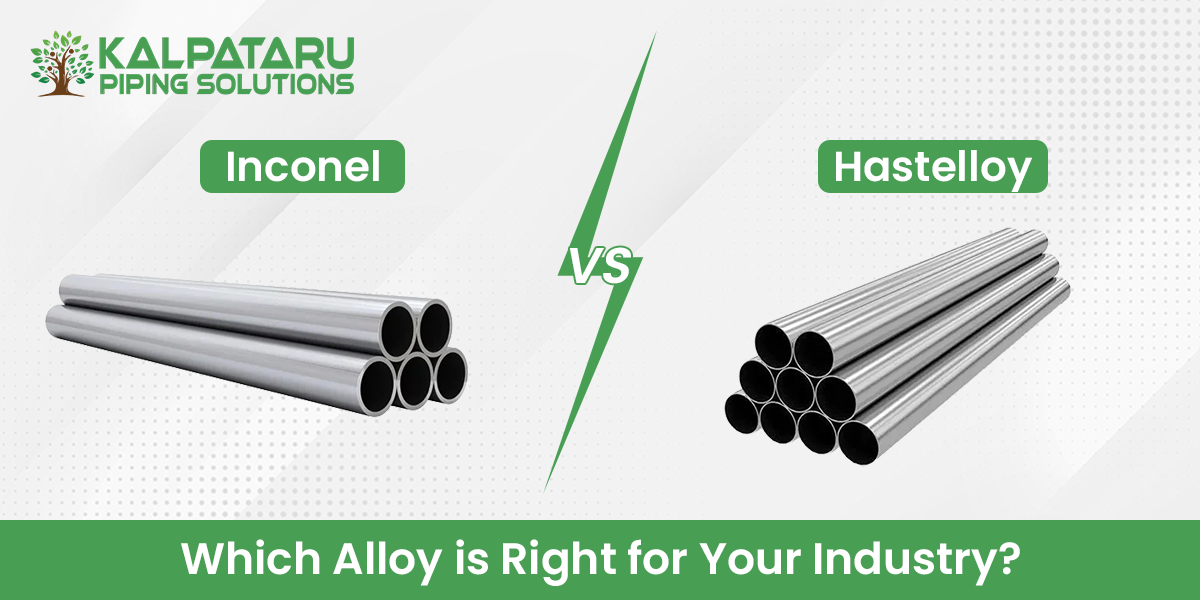
Hastelloy and Inconel are common for custom parts that require strength at elevated temperatures. They are utilized in aerospace, chemical processing, petrochemical, marine, and power plants. Both are nickel-based chromium containing alloys. They provide resistance to corrosive and oxidizing environments, as well as resistance to thermal shock, which makes them effective manufacturing materials for harsh conditions. They are similar, but the chemistries are different. The differences in chemistries affect performance and how the materials will process. The selection between Hastelloy and Inconel materials will ultimately be determined by the application needs of the end-users, the temperature, media and life required. We will describe below the difference between Hastelloy and Inconel with straightforward explanations. You will see the key typical properties, the most common uses of each, and some notes on Hastelloy vs Inconel price. We also discuss the difference between Inconel 625 vs Hastelloy C276 when possible, so you can determine which material would be best for your application needs.
What is Inconel?
Inconel is a system of nickel-based alloys designed to withstand heat. It offers resistance to oxidation at high temperatures and retains strength under severe mechanical stress, making it ideal for extreme service applications. Inconel is commonly used in industries for hot zones and cycling duty, with aerospace, power, generation, and chemical processing being the most typical industries.
Inconel parts are capable of repeated thermal cycles without rapid degradation. Two commonly used grades of Inconel are 625 and 718. Inconel 625 is known to resist corrosion in aggressive media. Inconel 718 is selected when high strength and creep resistance are paramount.
Enquire Now
What is Hastelloy?
Hastelloy is a nickel-based alloy family built for severe corrosion. It performs in chemical plants, offshore systems, and power facilities. It resists both oxidizing and reducing media. That limits pitting, crevice attack, and stress corrosion cracking, even in chloride-rich or sour service. Popular grades include C22, C276, and X. Each grade targets specific needs such as broader chemical compatibility, weldability, or high-temperature strength.
Inconel vs Hastelloy Chemical Composition
Both alloy families share several elements, yet the percentages and the presence or absence of certain additions vary. Those shifts in chemistry create clear trade-offs in strength, weldability, and corrosion resistance. That’s the core difference between Hastelloy and Inconel across real-world service.
Chemical composition of Inconel alloys
Some Inconel grades use higher iron content for cost control and service in moderate temperatures. They still keep solid heat resistance in medium to slightly higher temperature ranges. During precipitation hardening, additions of titanium, aluminum, and niobium boost mechanical strength and improve corrosion behavior.
| Element | Inconel 600 | Inconel 617 | Inconel 625 | Inconel 690 | Inconel 718 | Inconel X-750 |
|---|---|---|---|---|---|---|
| Carbon | 0.15 | 0.15 | 0.10 | 0.019 | 0.08 | 0.08 |
| Manganese | 1.00 | 1.00 | 0.50 | 0.35 | 0.35 | 1.00 |
| Sulfur | 0.015 | 0.015 | 0.015 | 0.015 | 0.015 | 0.015 |
| Phosphorus | 0.015 | 0.015 | 0.015 | 0.015 | 0.015 | 0.015 |
| Chromium | 14.0–17.0 | 20.0–24.0 | 20.0–23.0 | 30.0max | 17.0–21.0 | 14.0–17.0 |
| Silicon | 0.50 | 0.50 | 0.50 | 0.35 | 0.35 | 0.50 |
| Molybdenum | – | 8.0–10.0 | 8.0–10.0 | – | 2.8–3.3 | 0.50 |
| Niobium | – | 3.15–4.15 | 3.15–4.15 | – | 4.75–5.50 | 0.70–1.20 |
| Cobalt | 1.0 | 10.0–15.0 | 1.00 | 0.01 | 1.00 | 1.00 |
| Copper | 0.50 | – | 0.50 | 0.50 | 0.30 | 0.50 |
| Aluminum | 0.35 | 0.8–1.5 | 0.40 | – | 0.65–1.15 | 0.40–1.00 |
| Titanium | 0.30 | 0.6 | 0.40 | – | 0.65–1.15 | 2.25–2.75 |
| Nickel | 72.0 max | 44.2–56.0 | 58.0 | 59.5 max | 50.0–55.0 | 70.0 max |
| Iron | 6.0–10.0 | 3.0 max | 5.0 max | 9.20 max | Balance | 5.0–9.0 |
| Boron | – | 0.006 | – | – | 0.006 | – |
Chemical composition of Hastelloy alloys
Hastelloy belongs to the nickel–molybdenum–chromium family. Many grades also include small amounts of iron, cobalt, and tungsten. This blend gives broad resistance to oxidizing and reducing media and helps limit pitting and crevice attack
| Alloy | Carbon | Cobalt | Chromium | Molybdenum | Vanadium | Tungsten | Aluminum | Copper | Niobium | Titanium | Iron | Nitrogen | Other % |
|---|---|---|---|---|---|---|---|---|---|---|---|---|---|
| B | 0.08 | 1.25 | 15.5–17.5 | 28.0 max | 0.30 max | – | – | – | – | 5.50 max | Bal | – | Si 0.30 |
| B2 | 0.02 | 1.00 | 15.0 max | 26.0–30.0 | – | – | – | – | – | 1.00 | Bal | – | Si 0.10 |
| C | 0.07 | 2.50 | 14.5–16.5 | 17.0 max | 0.30 max | 4.0 max | – | – | – | 0.70 max | 5.75 max | Bal | V 0.20 |
| C4 | 0.01 | 2.00 | 14.0–16.5 | 15.0–17.0 | 0.35 max | 3.0–4.5 | – | – | – | – | 3.0–4.5 | Bal | Mn 1.00 |
| C276 | 0.02 | 2.50 | 14.5–16.5 | 15.0–17.0 | 0.35 max | 3.0–4.5 | – | – | 1.52–5.0 | 1.7–2.5 | 5.0 max | Bal | Mn 1.00 |
| G | 0.05 | 2.00 | 21.0–23.0 | 5.5–7.5 | – | – | – | 1.0 max | – | – | Bal | – | Mn 1.00 |
| N | 0.05 | 2.00 | 20.5–23.0 | 16.0 max | 0.20 max | – | – | 0.10 max | – | 3.00 max | Bal | – | Si 0.50 |
| S | 0.03 | 2.00 | 15.0 max | 14.5 max | – | 3.0 max | – | 0.20 max | – | – | Bal | – | Mn 1.00 |
| W | 0.03 | 2.00 | 21.0 max | 24.5 max | – | – | 0.60 max | – | – | 1.8–5.0 max | Bal | – | Si 0.60 |
| X | 0.10 max | 2.00 max | 21.0 max | 9.0 max | – | – | – | – | – | – | Bal | – | Si 0.60 |
Mechanical Properties of Inconel vs Hastelloy
The selection of an alloy will start with its mechanical properties under load and to heat. Tensile and yield strength tell how much stress a component can endure before deforming. Elongation tells how ductile it is and the ease of forming. Hardness relates to wear and galling.
When you look at the values for Hastelloy C276, Hastelloy X, Inconel 625, and Inconel 718 these numbers also give you an explanation for the Inconel Hastelloy difference in real service. Inconel 718 is at the high-strength end. Inconel 625 is similar in strength to C276 but with some strong corrosion resistance as well. The Hastelloy grades put a strong emphasis on corrosion control and stability at temperature. Use the figures to guide Inconel vs Hastelloy choices, especially Inconel 625 vs Hastelloy C276, before weighing price and availability.
| Property | Hastelloy C276 | Hastelloy X | Inconel 625 | Inconel 718 |
|---|---|---|---|---|
| Tensile Strength (MPa) | 690 | 760 | 827 | 1034 |
| Yield Strength (MPa) | 283 | 340 | 414 | 724 |
| Elongation (%) | 50 | 30 | 30 | 25 |
| Hardness (HB) | 200 | 220 | 215 | 240 |
How to Choose Between Inconel and Hastelloy
Choosing the right Hastelloy vs Inconel grade starts with clear specs and a dependable source. Keep your service media, temperature, and code requirements in view. Follow these steps to secure the right nickel alloy with fewer delays and cleaner paperwork.
- Define alloy needs
Confirm the exact grade and product form. Typical choices inlcude Hastelloy C276 or C22; Inconel 625 or 718. Match the alloy to your conditions like corrosion resistance, high-temperature strength, weldability, and fabrication method. - Choose a reliable supplier like Kalpataru Piping Solution
Work with a partner that knows Hastelloy and Inconel inside out. Kalpataru Piping Solution supplies pipes, tubes, plates, sheets, fittings, and fasteners in major grades, with cut-to-size support and quick dispatch. We provide MTCs (EN 10204 3.1/3.2), heat numbers, ASTM/ASME compliance, and full traceability. Ready stock, export packaging, and global shipping help keep projects on schedule. Ask for current Hastelloy vs Inconel price and lead times by form. - Lock pricing and lead time
Request transparent line items like grade, size, schedule, finish, MOQ, and surcharges. Confirm lead time by form (pipe, tube, plate, fittings, fasteners). For larger lots, check tiered pricing or volume breaks. - Ask for samples and test data
Where feasible, evaluate a sample coupon. Require documentation: chemical composition (spectro), mechanicals, and corrosion data if available. Obtain MTCs and any third-party inspection notes. - Plan logistics and service support
Clarify packing, export markings, and shipping method. Get tracking and delivery milestones. Confirm after-sales support for replacements or variances against the PO. - Choose the procurement channel
You can buy direct from producers or through qualified distributors. Specialized online platforms can help compare Hastelloy vs Inconel price, current stock, and specs in one place. Verify authenticity and documentation before release.
Hastelloy vs Inconel Price: Which Alloy Offers Better Value?
Hastelloy is generally priced above Inconel. The primary driver is its higher molybdenum content in grades such as C276 and C22. This element improves corrosion resistance in reducing media and increases alloy cost.
Final pricing depends on nickel market levels, alloy surcharges, grade, product form (pipe, tube, plate, sheet, fittings, fasteners), dimensions, origin, testing, documentation, and lot size. Lead time and packaging requirements may also affect the quote.
Inconel vs Hastelloy- The Bottom Line
Inconel vs Hastelloy are both nickel-based superalloys with overlapping strengths. They suit duties that face high heat, high pressure, and aggressive media. Many plants specify them for process uptime and safety. Inconel’s chemistry favors oxidizing conditions and hot gas exposure. Hastelloy performs better in acidic and mixed reducing environments. That is the core Inconel Hastelloy difference seen in service. Because processing routes, base elements, and applications often overlap, selection can feel unclear. The right pick depends on temperature, chloride level, pH, and fabrication method.
Kalpataru Piping Solution can review temperatures, media, and code notes and advise on grade choice including Inconel 625 vs Hastelloy C276 for wet-corrosion duty.
Frequently Asked Questions About Inconel vs Hastelloy
Hastelloy resists corrosion better; Inconel excels at high temps and oxidation. Choose Hastelloy for acid environments and Inconel for heat and pressure.
Expensive, hard to machine/weld, heavy, prone to stress cracking, and limited availability. Not ideal for cost-sensitive, lightweight, or rapid fabrication needs.
C276 has more nickel/molybdenum, better for harsh chemicals. Incoloy 825 has more iron, good for sulfuric/phosphoric acids and easier to fabricate.
Steels, tungsten, titanium alloys can exceed Inconel’s strength. Inconel shines in heat resistance, but some metals beat it in hardness or tensile strength.
Enquire Now
Related Blogs
What is Stainless Steel Valve?
What Is Monel Alloy? Composition, Properties & Uses (Guide)